Future Trends in Vacuum-Packed Rice: Smarter Materials, Resealability, and Traceability
Future Trends in Vacuum-Packed Rice: Smarter Materials, Resealability, and Traceability
Published on: July 15, 2026
Vacuum-packed rice continues to change as buyers ask for stronger barrier protection, easier consumer handling, and lower packaging waste. The next stage is not only better vacuum performance, but a better full package system around the rice.
One clear trend is material development. Buyers want films that still protect against oxygen and moisture while using less material or improving recyclability. Another trend is user convenience, including easier opening and more useful resealing after the package is first opened.
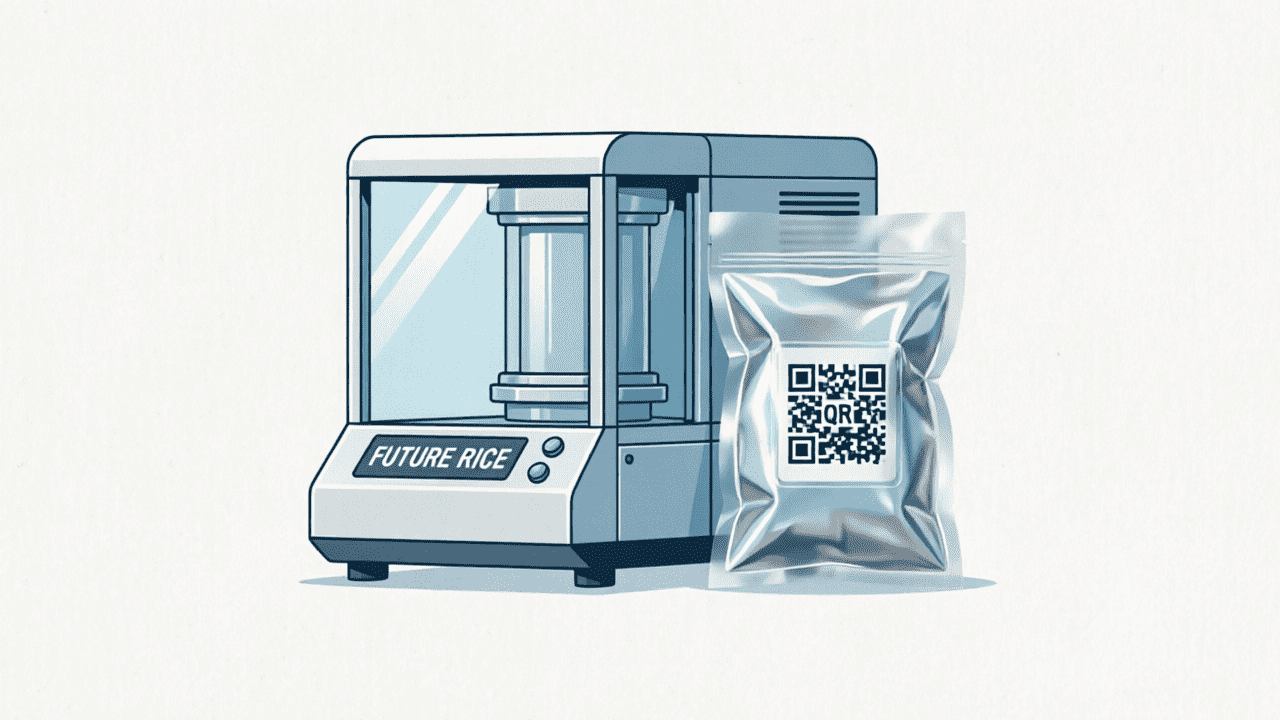
Traceability is also becoming more important. QR codes and digital identification systems help connect the pack to origin, storage guidance, and product records. The rice vacuum packing machine should support code readability and stable pouch shape after sealing.
What is changing now is that buyers are looking beyond the unopened bag. In the past, the main question was whether the package could hold a vacuum and protect shelf life. That still matters, but household use has added another layer of expectation. Once a consumer opens the bag, the package should still be manageable, reasonably neat, and easy to close again. If the pack protects rice well before opening but becomes inconvenient immediately after opening, the packaging system is only solving half of the real use case.
Material discussions are also becoming more realistic. Many teams want lower material weight or better recyclability, but those goals only help when the package still handles storage pressure, transport friction, and normal handling without creating more leakage or more broken grain. In other words, sustainability claims have to survive contact with actual packaging conditions. A lighter structure that creates more complaints is not progress, even if it looks good in a specification comparison.
Traceability is likely to become more practical as well. A code on the bag is not valuable by itself. It becomes useful when it remains readable after sealing, when it links to information buyers and distributors actually use, and when the code placement does not interfere with package appearance. For rice brands that care about origin, batch visibility, or export documentation, that connection between printing and package stability is becoming more important than before.
Another future trend is more careful segmentation of package design by market channel. A premium retail pack, a family-size household pack, and a bulk distribution pack do not need exactly the same opening features, film feel, or final shape. Buyers are increasingly comparing packaging by end use rather than assuming that one rice pouch format should cover every sales channel. That shift usually leads to better package decisions because it starts from the buyer's actual product and user context.
Buyers should compare new materials and features against actual barrier performance, seal stability, and transport reliability before changing a proven rice package format. The most durable packaging updates are usually the ones that solve a real handling or storage problem while keeping the basic protection performance firmly in place.
For daily production, the most useful habit is to review the package after it has rested, not only when it leaves the sealing area. Powder can settle, compact, or reveal slow leakage after handling. A short check after storage gives buyers a more honest view of whether the machine, film, and filling method are working together.
Contact our engineering team directly:
Email: export@jialong.cn
WhatsApp: +86-136-2579-4992
Products: rice vacuum packing machine