Locking in 2-AP: Engineering Aroma Barriers in Rice Packaging
Locking in 2-AP: Engineering Aroma Barriers in Rice Packaging
Published on: April 3, 2026 | By Jialong Material Science Desk
Premium rice is not judged just by its texture. It is judged by its scent. The signature fragrance of Jasmine or Basmati rice comes from a highly volatile organic compound known as 2-Acetyl-1-pyrroline (2-AP). Standard polymers cannot contain it. When stored in environments exceeding 25°C, 2-AP molecules rapidly permeate through basic plastic. To stop this invisible bleed, modern industrial rice packing must upgrade its material science. You cannot prevent rice aroma loss using cheap bags. It requires a heavy-duty rice vacuum packaging machine engineered to run advanced nano-coated laminates.
Basic vacuum extraction removes oxygen, but it does not alter the permeability of the bag wall. A true industrial rice packing operation deploys a rice vacuum packaging machine capable of fusing high barrier composite film. This is the only physical way to permanently prevent rice aroma loss.
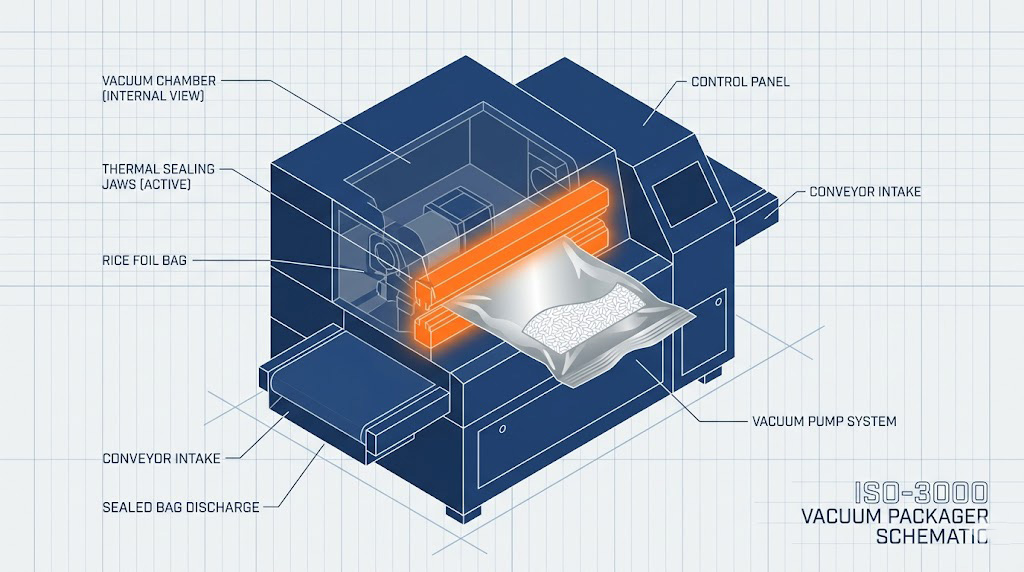
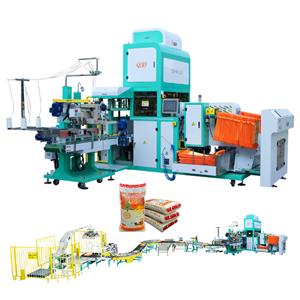
Figure 1: A rice vacuum packaging machine utilizing advanced thermal jaws to fuse multi-layer laminates.
How do we trap a gas as volatile as 2-AP? We rely on high barrier composite film. Standard aluminum foil layers are prone to microscopic flex-cracking during transit. Advanced industrial rice packing integrates an aroma-blocking nano-coating directly over the foil. When a rice vacuum packaging machine processes this material, the internal atmosphere is locked.
The vacuum sealing technology must deliver a flawless, high-pressure thermal weld. If the seal profile is weak, the nano-coating is useless. Elite vacuum sealing technology guarantees zero microscopic capillary leaks at the bag's edges. This dual approach—nano-coated high barrier composite film paired with extreme-pressure vacuum sealing technology—is exactly how engineers successfully prevent rice aroma loss for up to 18 months.
The preservation challenge extends beyond the factory seal. Once the consumer opens the package, standard bags fail immediately. High-end industrial rice packing now demands integrated spouts and silicone resealing mechanisms.
A modern rice vacuum packaging machine can seamlessly integrate these rigid dispensing fixtures into the flexible pouch. By combining structural resealability with high barrier composite film, you extend the product's lifespan in the consumer's pantry. Upgrading your vacuum sealing technology is the only way to comprehensively prevent rice aroma loss from the factory floor to the final serving.
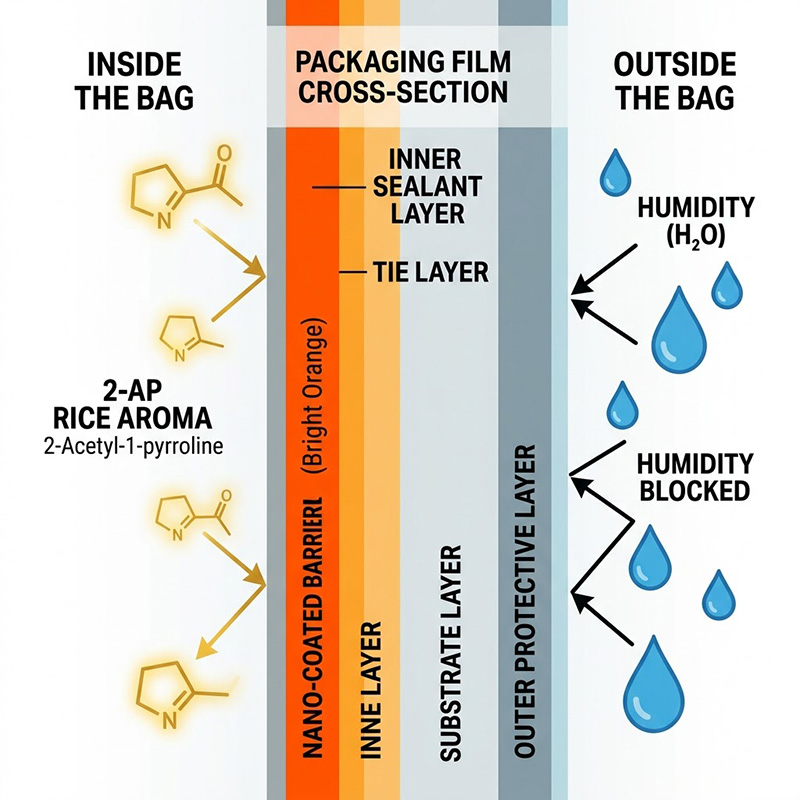
Figure 2: Micro-level cross-section showing nano-coatings reflecting aromatic molecules back into the rice.