Matching a Grain Packing Machine to the Silo Behind It
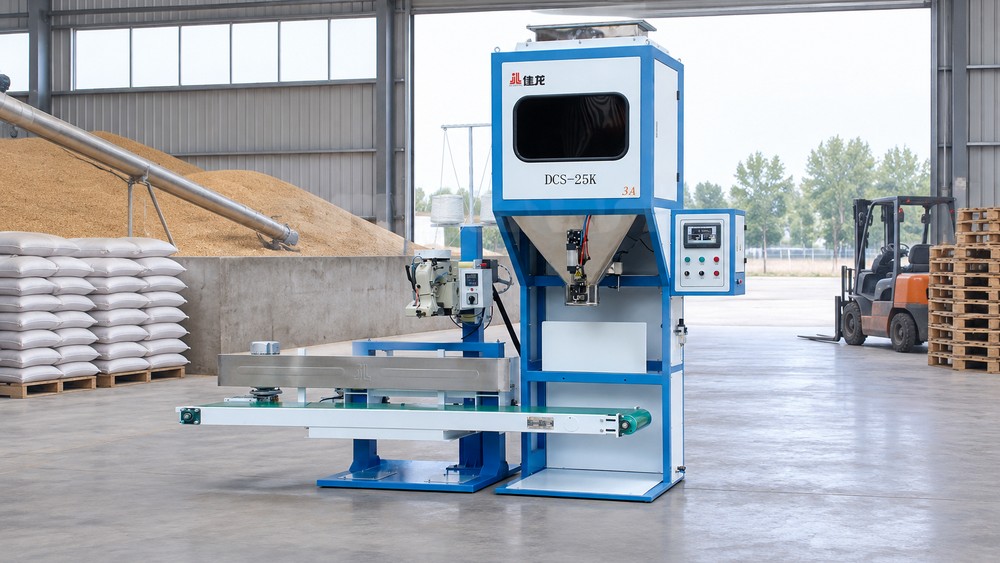
Most grain packing machine quotations are built around the silo the buyer wishes they had, not the one they own. A 500 tonne silo and a 2,000 tonne silo need different grain bagging machines for a reason that has nothing to do with the machine. The silo decides three things: how often the grain bagging line starts and stops, how much buffer you have when the dryer runs slow, and whether you can run one product or must change over.
Get those three wrong and the rated output of an automatic grain packing machine for 25 kg bags becomes a number in a brochure, while the grain bagging machine behind it is blamed for the silo's behaviour.
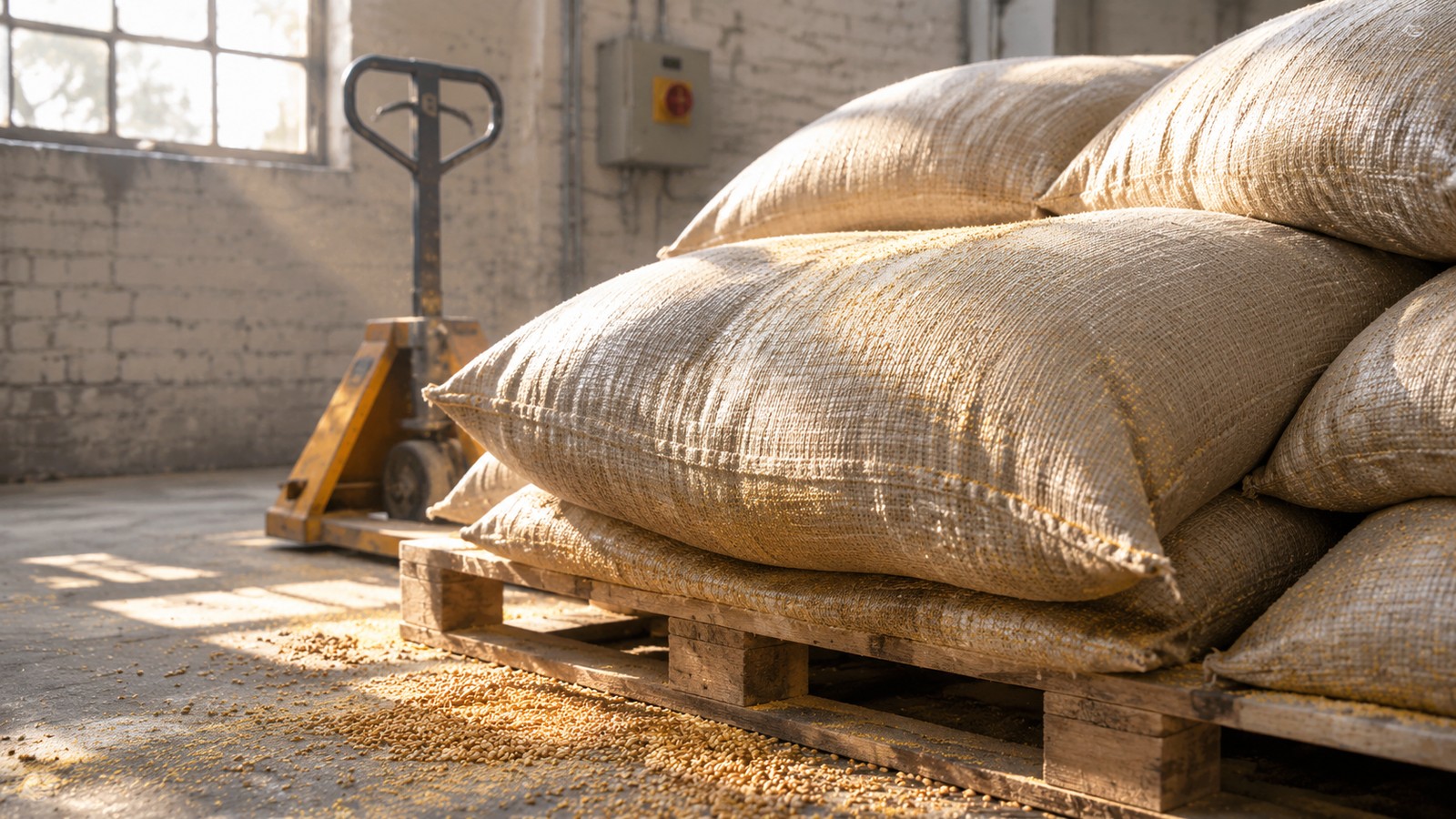
Filled woven sacks stacked on a pallet by the bagging bay, which is the tonnage a silo has to keep arriving at.
Start with the draw-down rate
Empty your smallest silo in a day and time it. That is the maximum rate your grain bagging line will ever see, and it is usually higher than the average. A silo with a 300 mm outlet and a 45 degree cone discharges faster than one with a flat bottom and an auger, and the difference decides whether your grain packing machine runs at a steady rate or surges.
A surge is expensive in a way a speed shortfall is not, because it forces the weigher to chase and the operator to react. Most weight complaints traced to a slow line are complaints about an uneven one.
How much buffer the line needs
Buffer is the tonnage you can lose without stopping. A mill that delivers straight from the dryer to the grain bagging machine has zero buffer, so a thirty minute dryer stoppage stops the grain bagging line.
A mill with two hours of buffer keeps packing while the dryer is fixed. Two hours at 20 tonnes an hour is 40 tonnes, which is a small silo, not a large one. If you are choosing between a bigger grain packing machine for 25 kg bags and a buffer silo, choose the silo first. It costs less and it protects the grain bagging machine you already have.
One product or three
Count the products that will pass through the line in a week. One product means a dedicated line and no changeover. Three products mean a cleaning routine between each, and cleaning a grain bagging machine properly takes 40 minutes minimum if you include the hopper, the chutes and the weigher.
Three changeovers a day at 40 minutes is two hours of lost production, which is 10 percent of a 20 hour day. An automatic grain packing machine that never stops to be cleaned is a machine that runs one product.
That number belongs in the capacity calculation, not in the operator's patience.
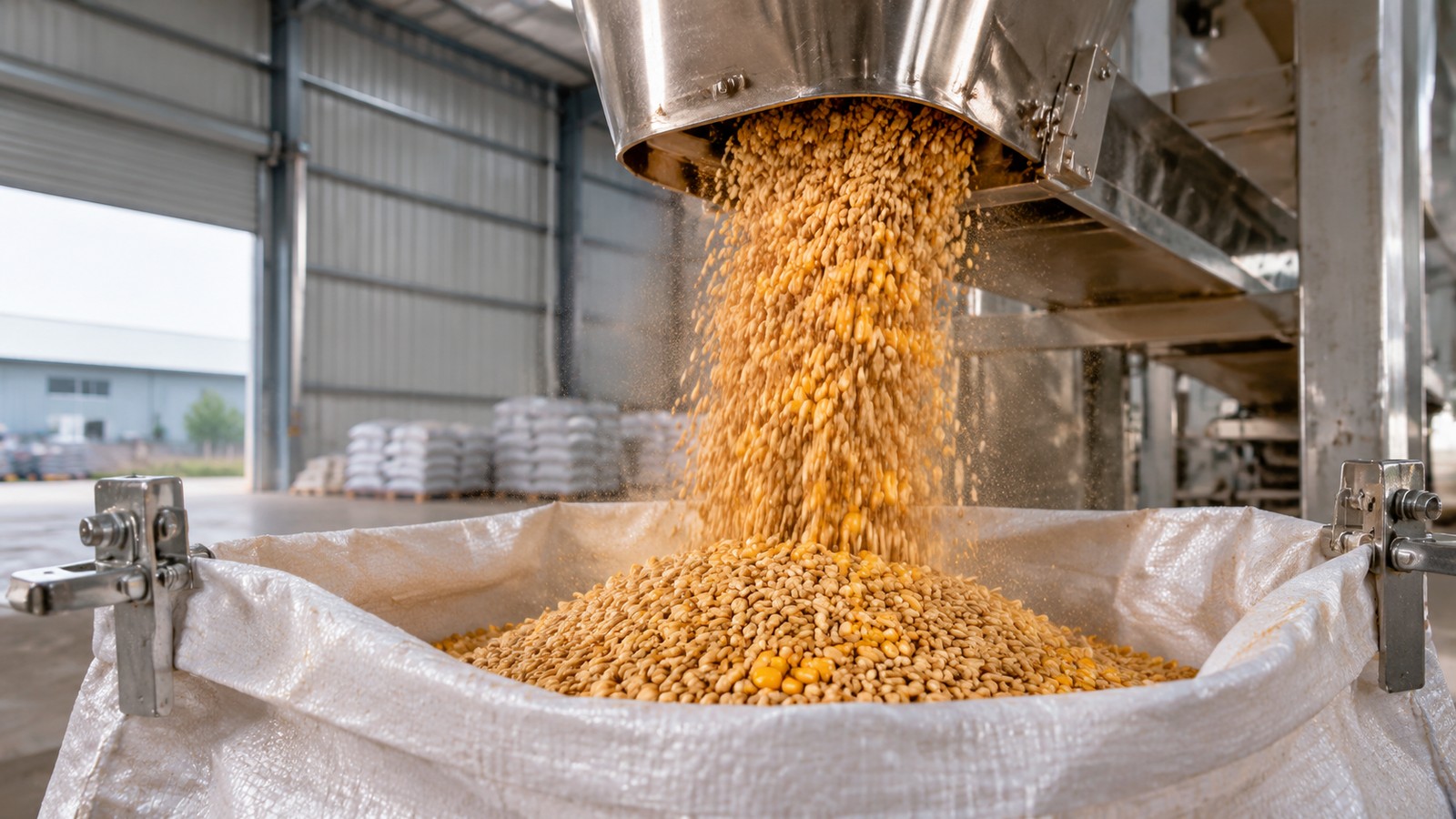
Corn pouring from the discharge spout in a solid stream into the woven sack, the flow a silo outlet has to sustain without surging.
What to ask before the quotation
Ask the seller to size the grain bagging machine against your draw-down rate, not your average rate, and ask how the grain bagging machine behaves on the last hour of the silo.
Ask what the machine needs upstream to run steadily, and how much buffer that implies. Ask how long a product changeover takes, and whether the automatic grain packing machine for 25 kg bags can be cleaned without tools. Three questions, and the answers will tell you whether the quotation is for your plant or for a catalogue page.
The mistake that costs the most
The most expensive mistake is buying capacity to compensate for an irregular feed. A 900 bag per hour grain bagging machine fed by a silo that surges will average 600 and will wear faster than a 600 bag per hour machine fed evenly. Fix the feed first. A grain packing machine sized to a steady flow is a smaller machine, a cheaper machine, and a machine that hits its number every shift.
A short commissioning test
Once the grain bagging line is running, time the first hour and the fourth hour separately. If the fourth hour is slower, the silo is running out of head and you are drawing from the cone rather than the body. That is a silo problem wearing a machine's clothes, and it will not be solved by a service call on the automatic grain packing machine.
The silo outlet is the number nobody measures
A grain packing machine is matched to a silo outlet, not to a silo. The outlet diameter, the gate type and the distance to the machine decide how fast the product can arrive, and none of them appear in the silo specification.
A 300 mm outlet with a slide gate delivers about 40 tonnes an hour on wheat. That is 1,100 bags an hour at 25 kg, which is above most grain bagging machines and below many silo owners' expectations. Measure the outlet before buying the automatic grain packing machine for 25 kg bags.
A grain bagging machine that can run at 900 bags an hour fed by an outlet that delivers 600 will run at 600, and the buyer will blame the grain bagging machine rather than the outlet.
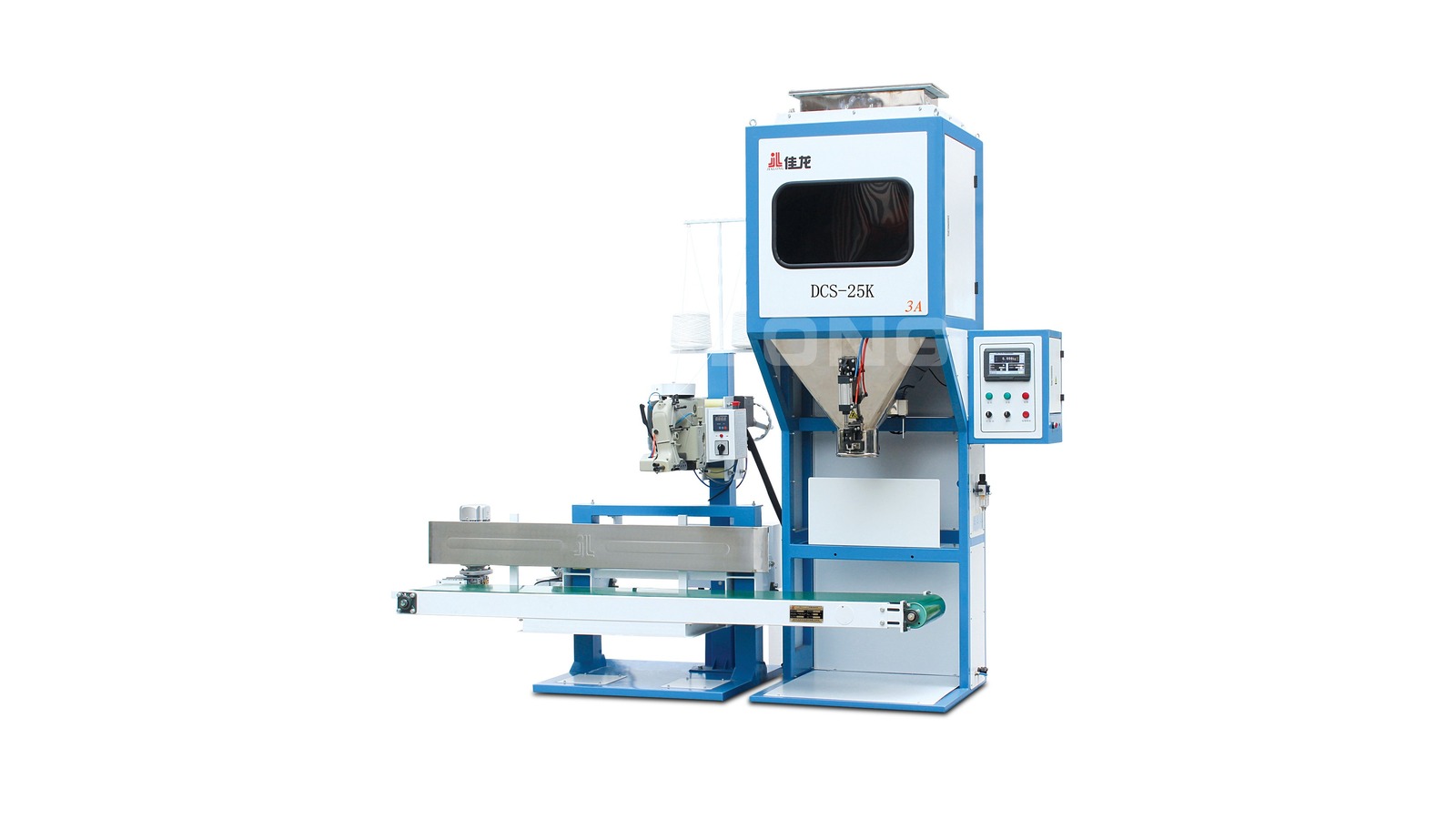
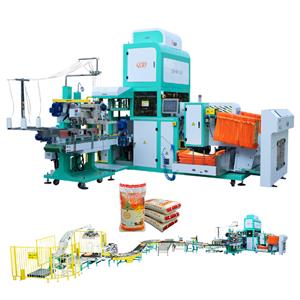
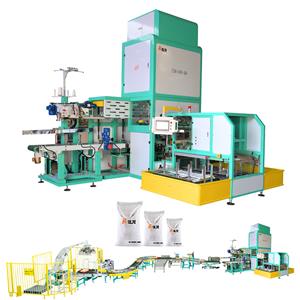
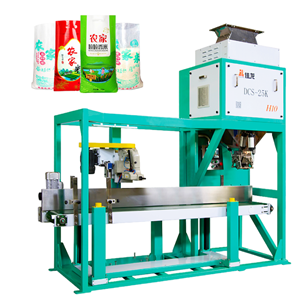
Hopper, weighing head, sewing head and takeaway conveyor share one frame and one air supply, and the frame is sized to the outlet behind it.
What the enquiry should contain
Four numbers settle the conversation faster than any brochure: the outlet diameter and the gate type, the tonnage the silo holds at working level, the number of products that share the line in a week, and the bag format with its seam. Send those four and any seller can size a grain packing machine for 25 kg bags in a day. Send none of them and every seller will quote the same catalogue machine and call it a match.
Zhangzhou Jialong Technology Co., Ltd. sizes an automatic grain packing machine for 25 kg bags against the draw-down rate and the buffer tonnage, and quotes a grain packing machine for 25 kg bags against your silo outlet measurement rather than a catalogue figure.
The grain bagging range sits at https://jialong-packing.com/, and export@jialong.cn or +8613806951676 returns a written figure within 24 hours of the outlet diameter, the gate type and the tonnage per shift.