Packaging Waste on a Granule Line: Where It Comes From, Where It Goes
Sustainability conversations start with film materials, but the fastest waste reductions on a granule line come from operational streams that never make the brochure: the bags thrown away at start-up, the product lost in changeovers, the seals that fail, the grams given away in every pack. Each stream has a control with a measurable payback.
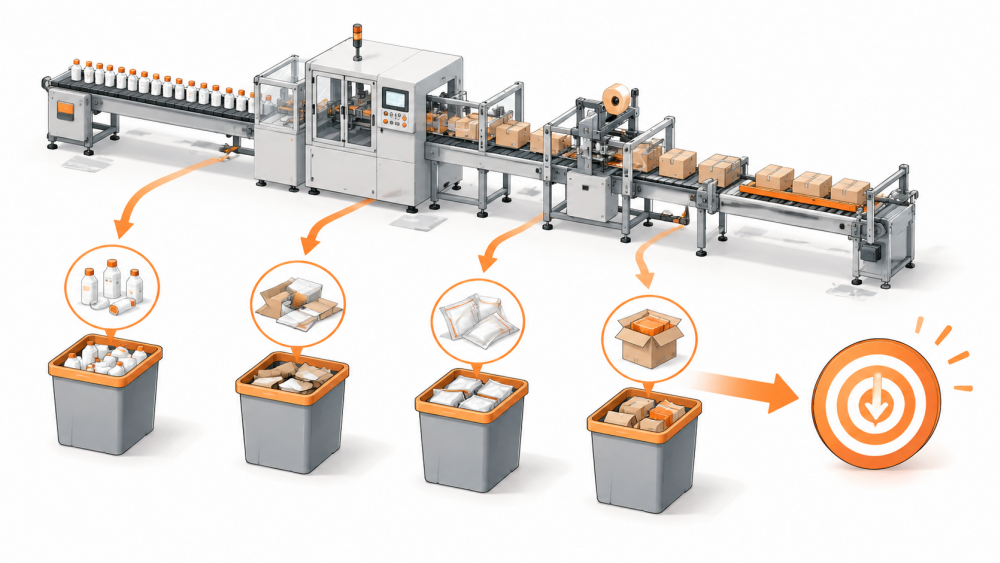
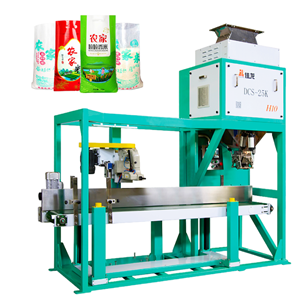
Stream one: start-up rejects: The first bags after every start are doubtful: settings cold, material flow uneven, operators settling in. Lines that count these rejects often find they are the largest single loss. Reducing them is a discipline: fixed start-up sequences, warm-up runs into a reclaim bin, and a defined first-article check before full speed. An automatic vacuum packer with stored recipes shortens the settle time because it remembers what worked.
Stream two: changeover losses: Every material or bag switch strands product in the line: what sits in the weigher, the chute and the transfer path. Quick-release contact parts and short purge routines cut this substantially on vacuum packaging machinery. On an industrial vacuum packaging line running mixed materials, the changeover design decided at purchase determines this stream for the line's whole life.
Stream four: giveaway: Every bag filled a few grams over weight donates product to the customer. Checkweigher data usually shows a distribution whose top half is voluntary charity. Tightening weighing accuracy and cutting the safety margin, in verified steps, returns product with zero packaging change at all. This is often the largest financial stream of the four.
Measure before you buy anything: Weigh the four streams for two weeks; the ranking is usually surprising. Film substitution, the popular sustainability move, then takes its proper place alongside controls that often pay faster. Zhangzhou Jialong Technology Co., Ltd. supports waste-reduction reviews with line data and documents control options at https://jialongpacking.com/ for operations teams starting this work.
A industrial vacuum packaging handover that includes wiring drawings and alarm notes shortens the first fault diagnosis considerably.
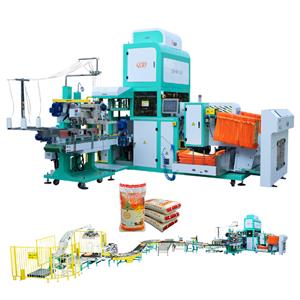
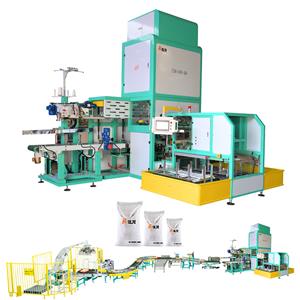
Waste on an integrated packaging line concentrates in four streams: start-up rejects, changeover losses, seal failures and overfill. An automatic vacuum packer with good diagnostics attacks all four. Vacuum packaging machinery that logs each event makes the pattern visible, and a grain vacuum packing machine tuned to the material cuts changeover waste faster than any film substitution.
Waste control on an integrated packaging line starts by making four losses visible: rejected start-up packs, changeover losses, failed seals and overfill. A grain vacuum packing machine with those records shows which stream pays back first, and the fix usually costs less than expected.
An automatic vacuum packer with logs, and vacuum packaging machinery that records each event, turn the four waste streams into a fixable list rather than a monthly surprise.
Industrial vacuum packaging reduces overfill by holding bag volume steady, so the dosing step can be tightened without changing the recipe.
An integrated packaging line gives you another waste lever: shared data. When filling losses, seal rejects and changeover scrap appear in one record, the pattern points to the station that actually costs money. That usually beats adjusting each machine in isolation.