Thermodynamics of the Seal: Eliminating Grain Burn in Rice Packaging
Thermodynamics of the Seal: Eliminating Grain Burn
Published on: April 10, 2026 | By Jialong Thermal Engineering Desk
Fusing high-barrier polymers requires sealing jaws to hit temperatures upwards of 180°C. In basic setups, this extreme heat conducts directly through the film and into the product mass. The result is localized thermal degradation. Rice grains sitting flush against the seal undergo rapid, unintended gelatinization. They turn brown. The delicate Vitamin B complex degrades instantly. To execute flawless industrial rice packing, engineers must treat the sealing zone as a thermodynamic hazard. It requires a highly calibrated rice vacuum packaging machine capable of arresting heat transfer within milliseconds to guarantee thermal damage prevention.
Basic continuous-heat sealers are a liability in modern industrial rice packing. Heat bleed is mathematically unavoidable without active thermal extraction. A professional rice vacuum packaging machine halts this conduction by deploying an integrated pulse cooling system immediately after the fusion cycle.
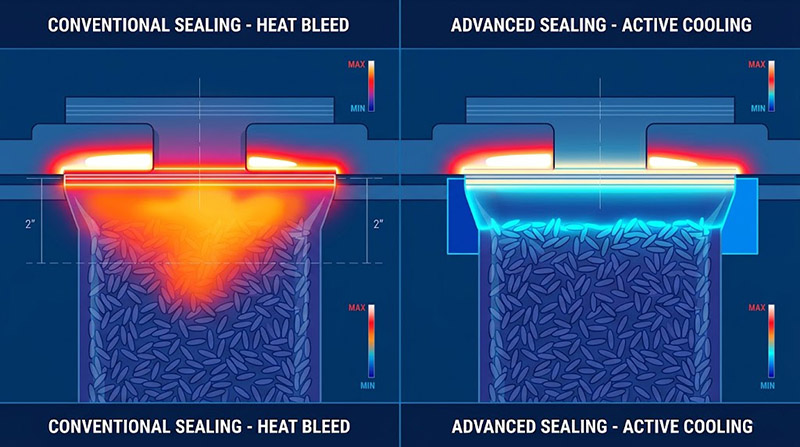
Figure 1: Infrared thermal imaging demonstrates how a pulse cooling system aggressively extracts heat to achieve thermal damage prevention.
Active Heat Sink and Parameter Compensation
How do we stop the heat from reaching the grain? Water-chilled pneumatic blocks. The moment the thermal jaws retract, the pulse cooling system clamps down on the exact same micro-surface. This active heat sink drops the film temperature from 180°C to ambient in under 0.4 seconds. The polymer sets instantly. The grain never registers the temperature spike. This specific hardware architecture is the only physical method to ensure total thermal damage prevention inside a heavy-duty rice vacuum packaging machine.
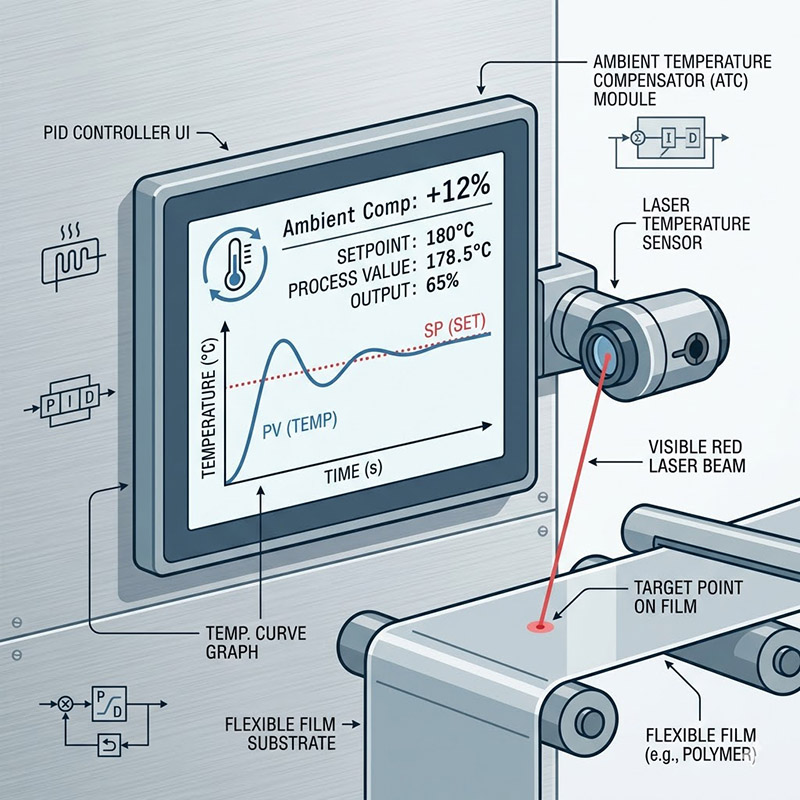
Furthermore, factory ambient temperatures shift radically between summer and winter. Advanced vacuum sealing technology utilizes PID controllers with real-time seasonal compensation logic. If the warehouse hits 35°C in August, the internal software automatically extends the pulse cooling system dwell time. Every thermal parameter is dynamically adjusted. This level of algorithmic vacuum sealing technology is what separates high-yield industrial rice packing from operations plagued by inconsistent seal failures and burnt product.
Smart Warning Integration
Even with perfect vacuum sealing technology, improper consumer storage destroys biological stability. Modern machines now integrate modules to apply temperature-sensitive chromatic labels directly onto the film web. These labels act as a final fail-safe in industrial rice packing, warning users if they store the product in high-heat zones like kitchens or sunlit balconies.