Twenty-Five Kilo or Fifty, Which Grain Bagging Machine Pays
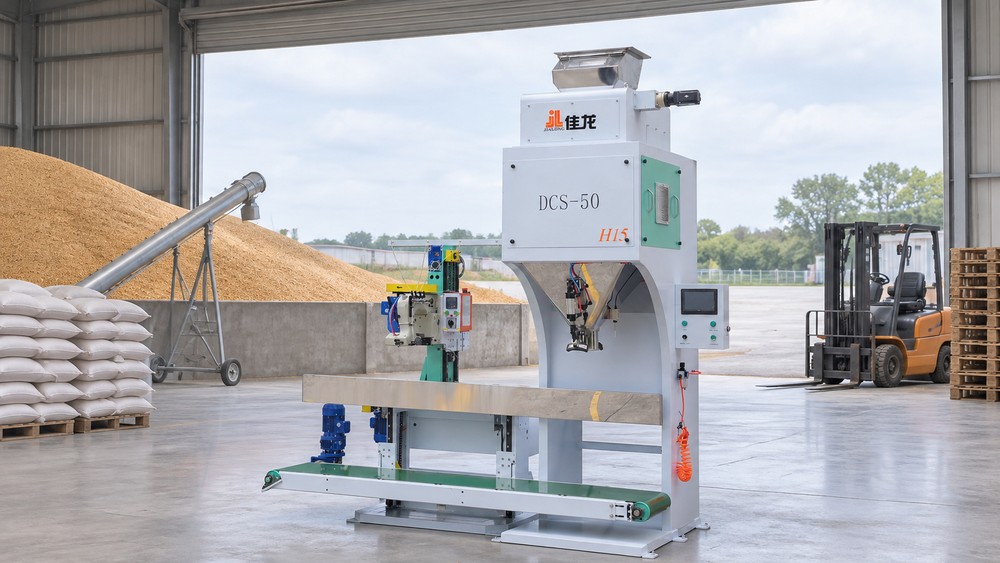
A grain bagging machine is bought twice. Once when the specification is written, and once when the first harvest arrives and the bags do not fit the pallet. The bag size decides which of those purchases you make.
Maize falling from a conical hopper into a woven bag held on a roller conveyor, the fill the clamp is set around.
Start with the pallet, not the bag
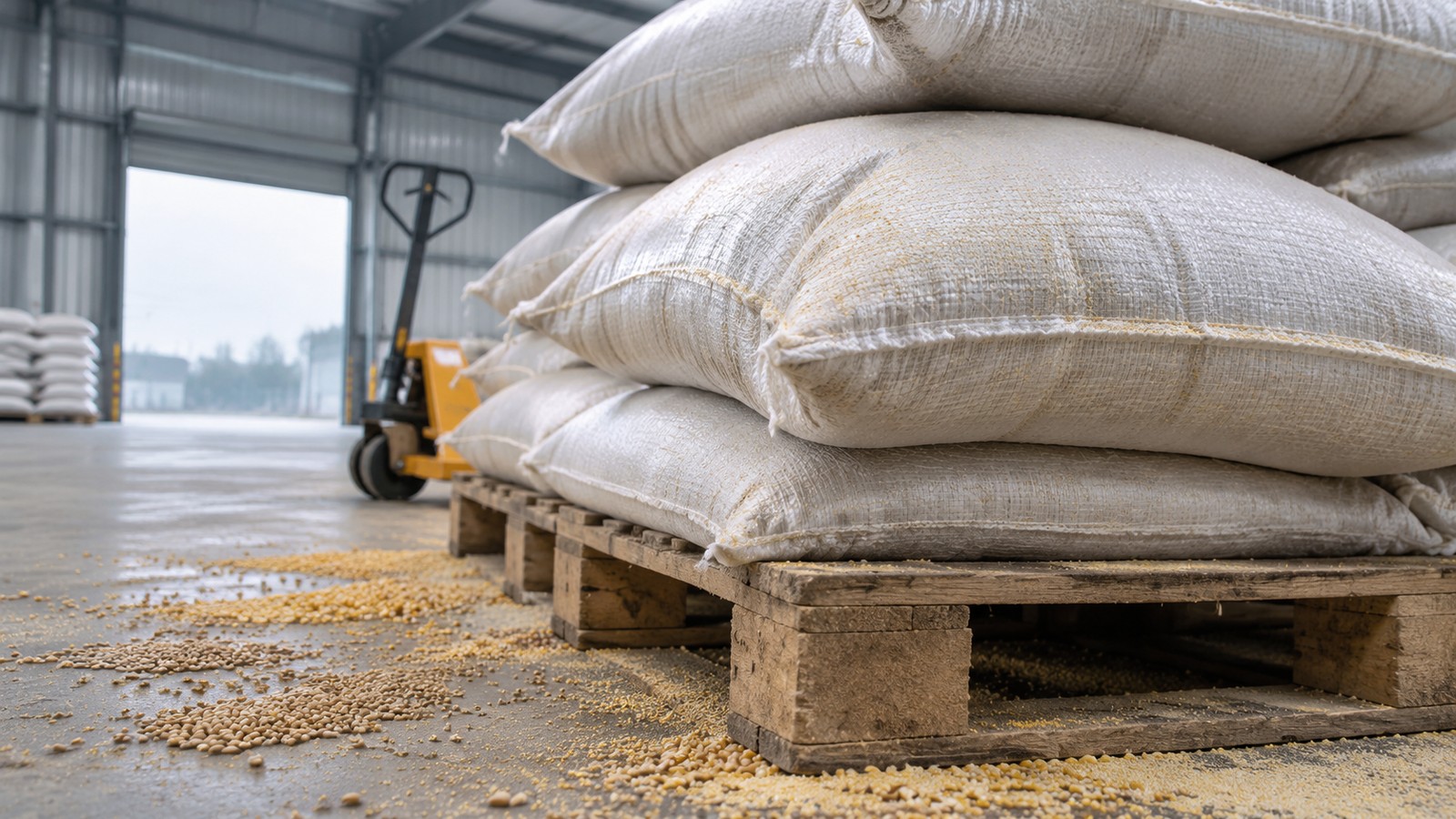
A standard pallet is 1,200 by 1,000 mm, and a stack is limited by the warehouse, the truck and the customer's forklift. A 25 kg bag stacks 40 to a pallet in a stable pattern. A 50 kg bag stacks 20 and is heavier at the base, which is where an automatic grain bagging machine for 50 kg bags starts to pay for the palletiser.
The pallet is the constraint. A bag that does not fit the pallet pattern wastes 8 to 12 percent of the truck volume, and that waste is paid on every shipment. It never appears in a grain bagging machine quotation, and it is the largest single number on this page.
What 50 kg actually costs
Two men can lift a 50 kg bag, but not for a full shift, and not safely. A mill that packs 50 kg needs mechanical handling at the stack, which is a cost the bag quotation never mentions.
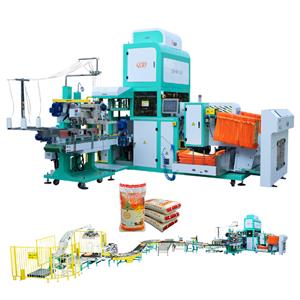
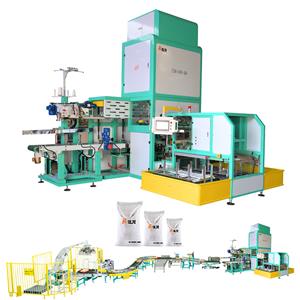
On the machine side, a 50 kg bag on an automatic grain bagging machine for 50 kg bags halves the bag count and doubles the product per cycle. An automatic grain bagging machine for 50 kg bags rated at 900 bags an hour does 22.5 tonnes in 25 kg and 45 tonnes in 50 kg, at the same mechanical speed and the same operator.
What 25 kg actually costs
Twice the bags, twice the thread, twice the pallet handling. But 25 kg is the format most wholesale buyers want, and it is the format a single operator can move without help.
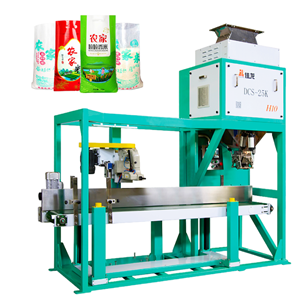
For a mill under 20 tonnes a day, 25 kg on an automatic grain bagging machine for 25 kg bags is usually right, because the labour saved on handling pays for the bags. A grain bagging machine for 25 kg bags is also the format the pallet pattern was designed around, which is why it stacks and ships without a second decision.
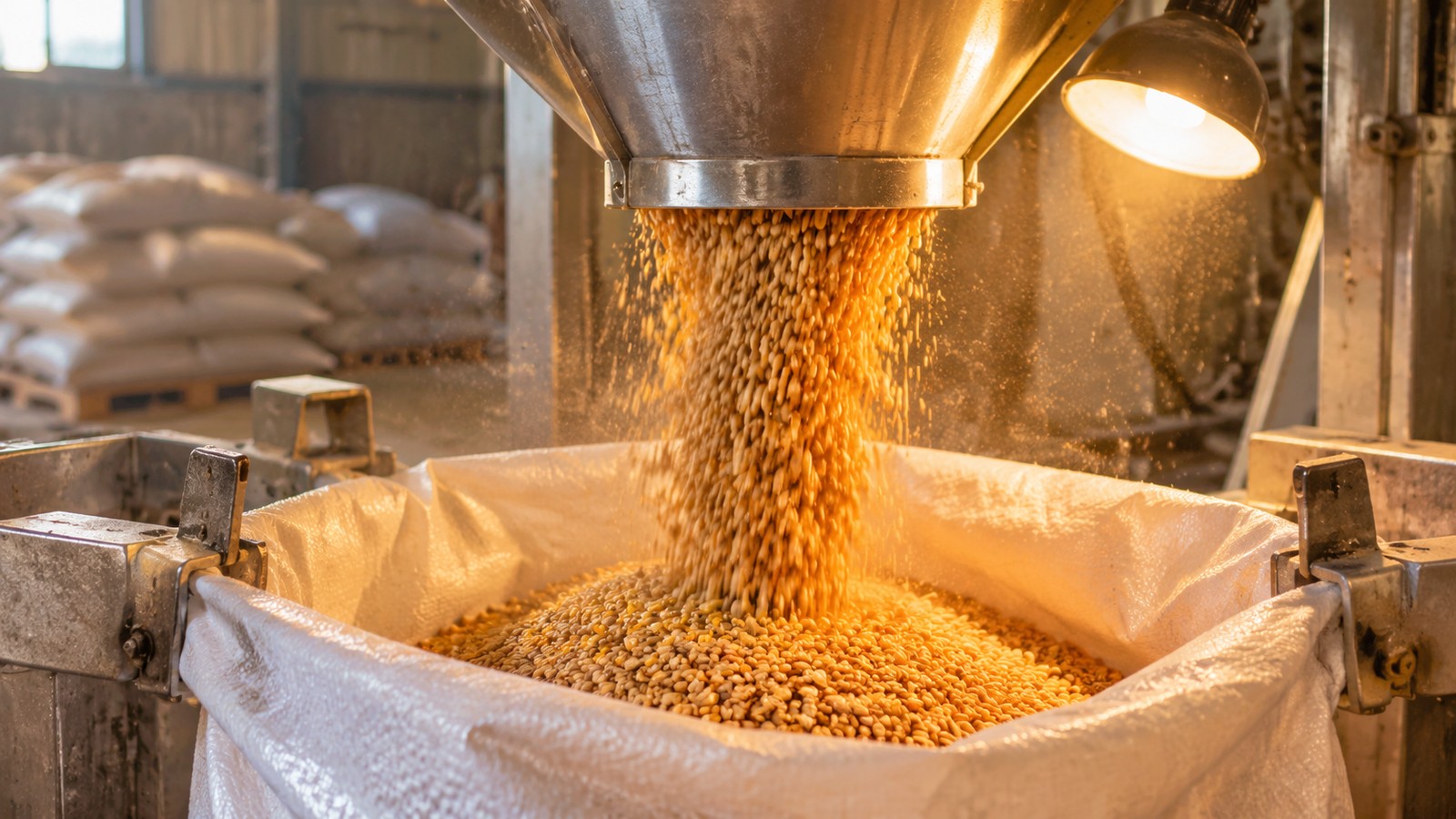
Grain dropping from the spout into an open bag under warm workshop light, the drop the pallet pattern follows.
The third option nobody quotes
40 kg. It fits a pallet neatly, moves with two people comfortably, and matches the bag sizes the woven PP industry already stocks. Many mills in Southeast Asia run 40 kg for exactly that reason.
An automatic grain bagging machine for 50 kg bags set down to 40 kg runs at 80 percent of its 25 kg bag rate and 160 percent of its 50 kg tonnage, and an automatic grain bagging machine set the same way keeps the changeover inside a shift. The arithmetic is worth ten minutes with a calculator, and the quotation rarely reflects it.
The test before you commit
Fill ten bags at each size on the automatic grain bagging machine for 25 kg bags, stack them on a pallet, and wrap it. Then measure the height and the footprint. A stack too tall for the truck door is a bag size problem discovered too late, and it is discovered in front of the customer.
The question to ask the buyer
Not what size do you want. What does your customer do with the bag when it arrives. A bag opened and poured into a hopper wants to be large. A bag carried to a kitchen wants to be small, and the two formats rarely share a grain bagging machine for 25 kg bags.
The answer decides the machine. A bag size on an automatic grain bagging machine for 50 kg bags is a market decision before it is an engineering one, and the market is the buyer's buyer rather than the buyer.
Operator in gloves holding a woven sack under the discharge spout, the bag handling the size decision is made for.
The arithmetic of handling
Under 25 kg on an automatic grain bagging machine for 25 kg bags a worker lifts 400 bags a shift. Over 40 kg the same tonnage is 200 lifts, and the injury rate on 50 kg bags is roughly double.
So the bag size is a safety decision before it is a cost decision. A grain bagging machine that halves the lifts and doubles the load has not made the job easier, it has made the injury heavier and rarer.
Where the bag size enters the price
Every bag size change on a grain bagging machine touches the weigher, the clamp, the sewing head and the conveyor height. A machine quoted for one size and switched to another needs all four re-set, and the changeover is where the throughput figure quietly disappears.
Ask for the changeover time between the two sizes you actually run, not between 25 and 50 kg on a demonstration floor. A grain bagging machine for 25 kg bags that takes forty minutes to become a 50 kg machine is two machines with one frame, and it is priced as two.
The order that avoids the second purchase
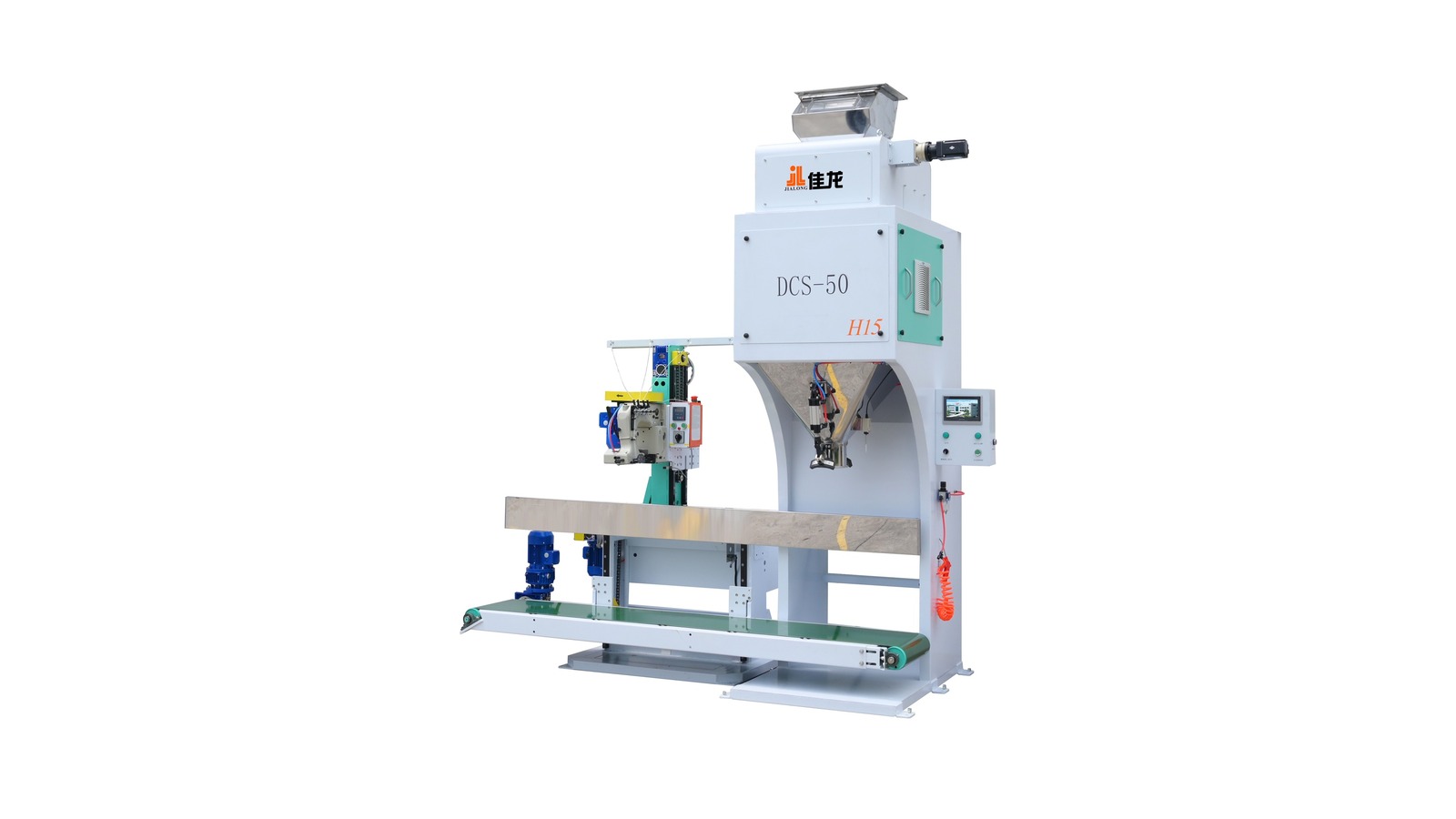
Zhangzhou Jialong Technology Co., Ltd. builds the automatic grain bagging machine for 25 kg bags and the grain bagging machine for 50 kg bags in Zhangzhou, and quotes the clamp, the sewing head and the conveyor against the bag you name rather than against a default. The grain bagging range sits at https://jialong-packing.com/, and export@jialong.cn or +8613806951676 will send the pallet pattern for your bag size in writing.
Send the bag size, the pallet footprint, the truck type and the daily tonnage. Four numbers decide whether an automatic grain bagging machine needs a wider clamp or a second conveyor, and one of them is the one every quotation leaves out.