Vacuum Packaging Conditions for Granular Materials: Film, Product, and Setting Checks
What to check before vacuum-packing granules
Published on: July 31, 2026
When a vacuum pack fails, the pump is often blamed first. That is understandable, but it is not where I would start. We have seen bags leave the machine looking tight and neat, only to soften later because fine dust sat across the seal or a hard particle made a pinhole in the film.
Put a sample of the product on the bench and handle it before choosing the film. Does it leave powder on your fingers? Are there broken pieces with sharp corners? Does the surface feel oily? A round grain normally settles without much trouble. An irregular product may bridge during filling, trap air in pockets, or press against one small area of the bag. Those details change what the film and seal have to cope with.
The film specification is useful, but the first bag tells us more. We normally fill several samples and mark them with the temperature and vacuum time. One may look fine on the table yet show a white stress mark at the corner after it is folded. Another may seal at a slow test speed but start leaving weak spots once the machine runs continuously. This is why we do not approve a film from thickness alone. Moisture barrier and puncture strength have to be checked with the actual granules inside the bag.
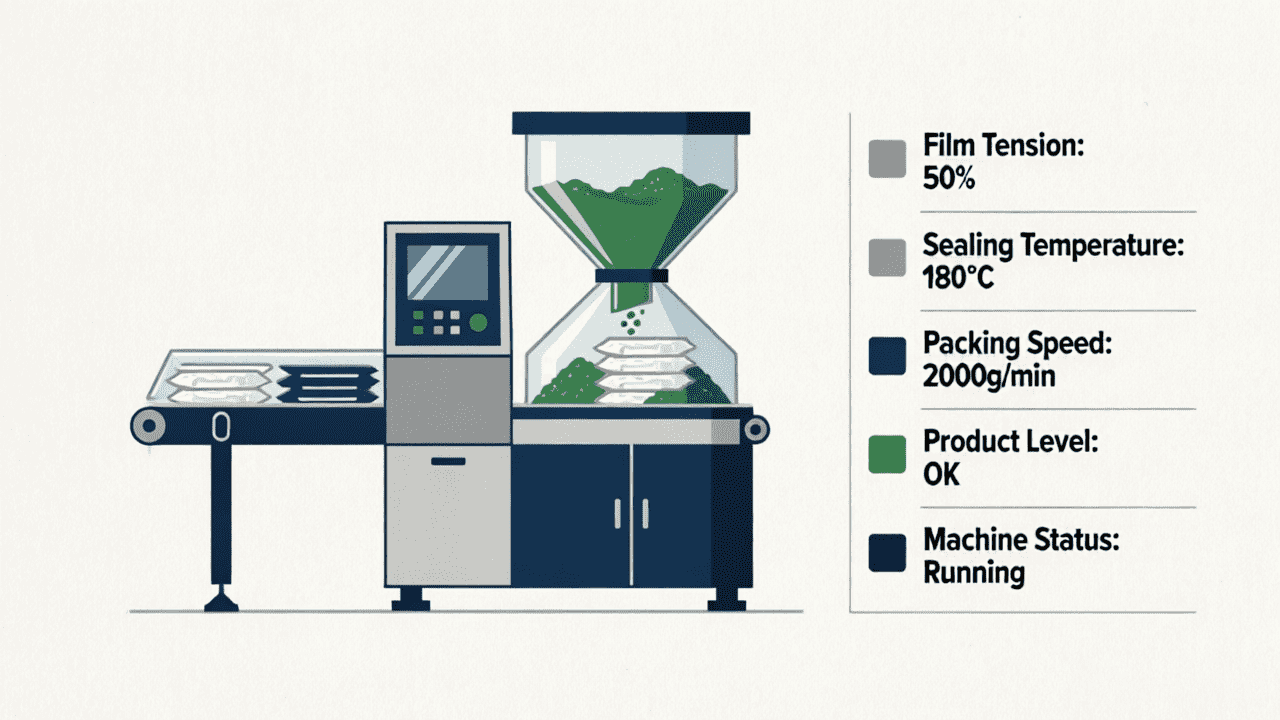
The setting trial is deliberately simple. We begin near the middle of the machine's normal range, make five bags and open two. Powder across the seal is visible straight away. A weak seal is different; it may appear only when the bag has cooled. We then alter one item, not everything at once, and run the next five. The notes are usually rough, but they show which change helped and which one did not.
The cheapest film quotation can look attractive until the line stops every few minutes. Moist granules and sharp granules do not cause the same failure, so there is no good reason to give them the same film by default. Line speed matters too. A film with a narrow sealing range may behave well during a slow trial, then become inconsistent in production. Compare rejected bags and downtime, not only the price per metre.
Keep the setting sheet beside the sample bag. It sounds basic, but it prevents an argument later: was the weak seal caused by the material, or did somebody change the machine? Record the condition of the product as well. A dusty batch or a warmer product can run differently even when the recipe shown on the screen has not changed.
It helps to keep a short record of what worked. Jot down the material, forming depth, seal quality, cut, and how the pack held up after handling. Later on, that note saves you from starting from scratch every time.
None of this is theory. These are the small details that decide whether the pack is still good once production is running day in, day out and no one is hovering over the first batch.
We never sign off a bag from the sample sitting beside the machine. A few finished packs go into the same type of carton the customer plans to use. The carton is moved, stacked and left overnight. The next morning, the bags are handled again. A corner may have rubbed through. Dust may have worked into a seal. Sometimes nothing has failed, but the bag has gone slack enough to show that air entered somewhere. Those ordinary checks often find faults that were invisible during the first few minutes of the trial.
Talk to our engineering team about your material:
Send us the granule type, target bag size and expected line speed. Photos of the product and a short packing video are useful when samples cannot be sent immediately.
Email: export@jialong.cn
WhatsApp: +86-136-2579-4992
Products: granule packing machine