Vacuum-Packed Rice: Shelf Life, Aroma Protection, and Storage Efficiency
Vacuum-Packed Rice: Shelf Life, Aroma Protection, and Storage Efficiency
Published on: July 3, 2026
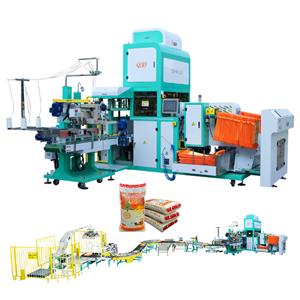
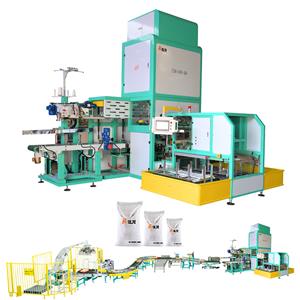
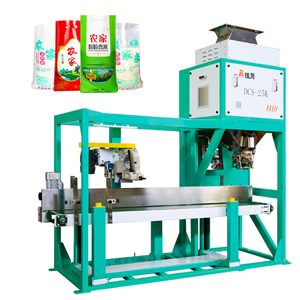
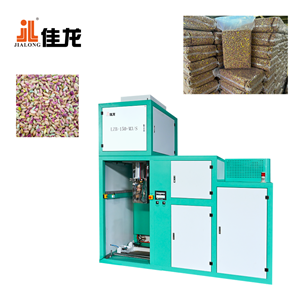
Rice benefits from vacuum packaging because oxygen, moisture, pests, and odor transfer all affect storage quality over time. A rice vacuum packing machine helps reduce those exposures and gives the product a more stable package for longer routes and cleaner handling.
One clear advantage is aroma protection. When oxygen exposure is lower and the pack remains sealed, rice keeps a more consistent natural smell and flavor profile. This matters for premium and aromatic varieties as well as standard export grades.
Another advantage is storage protection. The sealed pouch helps reduce moisture gain, insect entry, and contamination from dust or external odors. It also creates a more regular pack shape that stacks efficiently in cartons and on pallets.
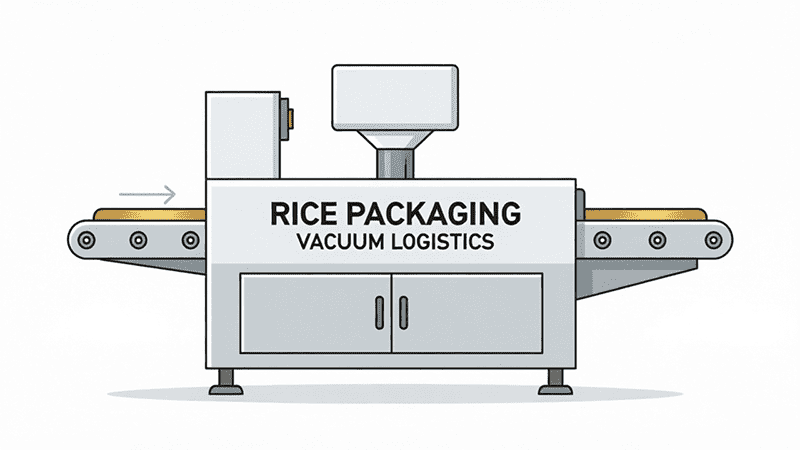
What makes vacuum-packed rice valuable in the market is not only that it stores longer, but that it stores more predictably. A rice brand may move through wholesale, export warehousing, retail shelves, and home kitchens before the bag is opened. At each step, the package is expected to keep the product dry, clean, and recognizable. When the pouch loses shape or takes on moisture, the problem is visible immediately, even before the rice is cooked. That is why packaging quality affects both shelf presentation and product trust.
Rice categories also do not behave exactly the same. Fragrant rice, long-grain rice, short-grain rice, and premium polished rice may respond differently to package firmness and handling pressure. If the vacuum is too aggressive, grain breakage can become a real concern, especially where appearance matters. If the package is too loose, the protection benefit becomes weaker. The useful operating window is therefore the point where oxygen exposure is reduced without putting unnecessary stress on the grain itself.
Another practical advantage of a good rice package is cleaner stock rotation. Compact, regular packs are easier to count, palletize, and display. Warehouses and retailers tend to prefer packaging that stays stable without constant adjustment, because that reduces handling time and visible shelf disorder. In this sense, the package is doing more than preserving rice; it is also making routine storage work easier and more consistent.
Consumers notice the packaging result later in a different way. They may not think about residual oxygen or seal temperature, but they do notice whether the rice smells fresh, pours cleanly, and looks whole when the bag is opened. If the bag has protected the product properly, the cooking experience starts with confidence instead of doubt. That human side of packaging is easy to overlook in factory discussions, but it is one of the reasons vacuum-packed rice continues to be preferred in many applications.
Buyers should still test residual oxygen, seal quality, package firmness, and transport resistance instead of approving the line on appearance alone. A rice vacuum packing machine proves its value when the package keeps doing its job after loading, storage, shipping, and final opening, not just in the first minute after sealing.
Rice packs should also be checked after stacking, because the dense shape changes how pressure moves through the carton. A good pack keeps the seal stable, protects the grain, and still looks neat after ordinary warehouse handling. That is the point where vacuum packaging shows its real value.
Contact our engineering team directly:
Email: export@jialong.cn
WhatsApp: +86-136-2579-4992
Products: rice vacuum packing machine