Vacuum-Packed Rice Trends: Aroma Protection, MAP Control, and Smarter Retail Packs
Vacuum-Packed Rice Trends: Aroma Protection, MAP Control, and Smarter Retail Packs
Published on: June 12, 2026
A rice vacuum packing machine used to be judged mostly by oxygen removal and brick-pack appearance. That is no longer enough for premium rice. Jasmine, basmati, organic rice, and regional specialty grains need aroma protection, stable texture, clean handling, food-contact material review, and packaging data that buyers can scan.
The future direction is practical, not futuristic. Rice packers are asking for controlled vacuum recipes, optional nitrogen flushing, resealable formats, recyclable or lower-impact materials, and QR-based traceability. Each feature changes the machine acceptance test.
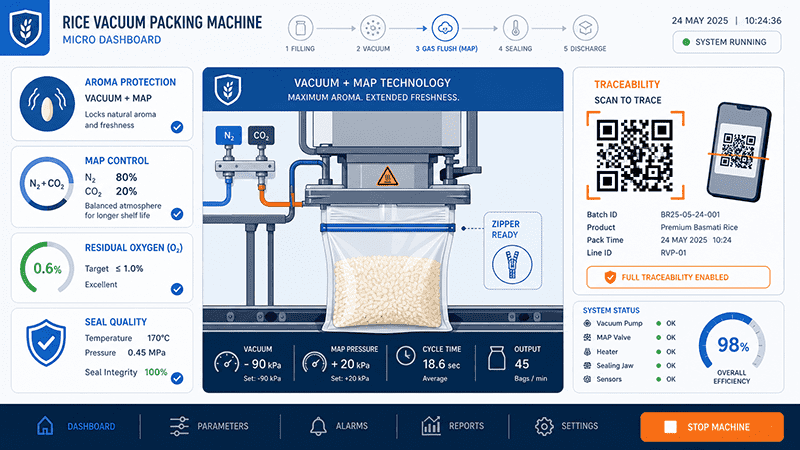
Aroma Protection Requires More Than a Hard Vacuum Pack
Premium rice depends on aroma as much as shelf life. A rice vacuum packaging machine should protect volatile aroma compounds without crushing brittle grains or creating hard corners that damage the film. Excessive vacuum can improve compactness while harming presentation and cooking quality.
The practical test is product-specific. Run the final rice variety, bag size, and film. Measure vacuum decay, package firmness, broken-rice percentage, and aroma retention after storage. One vacuum recipe should not be used for jasmine, basmati, brown rice, and common white rice without validation.
| Trend | Risk if not tested | Machine check |
|---|---|---|
| Premium aroma protection | Flat sensory quality after storage | Validate the rice vacuum packing machine with final film and rice variety |
| MAP or nitrogen flushing | Soft packs or unstable residual oxygen | Record gas flow, residual oxygen, seal strength, and package firmness |
| Resealable retail bags | Zipper heat damage or poor vacuum collapse | Test zipper position, seal jaw clearance, and opening force |
| QR traceability | Code distortion after vacuum forming | Scan after packing, carton compression, and shelf simulation |
MAP and Nitrogen Flushing Need Recipe Discipline
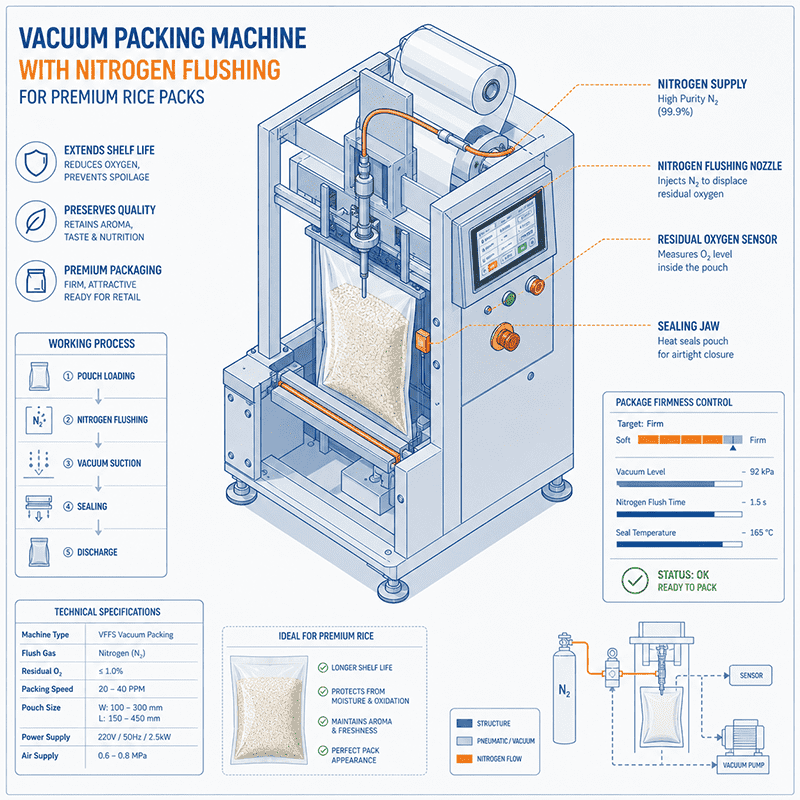
A vacuum packing machine with nitrogen flushing can protect shape and reduce oxygen exposure when pure vacuum creates too much compression. This is useful for premium retail rice where grain appearance, bag feel, and cooking texture all matter.
Gas flushing is not a decoration. The system should track vacuum time, nitrogen flow, residual oxygen, seal temperature, dwell time, and finished-pack firmness. Without those records, the packer cannot explain why one batch feels tight and another feels soft.
Sustainable Materials and Smart Packs Need Verification
Recyclable structures, biodegradable claims, or recycled plastic content may support brand goals, but food-contact suitability and barrier performance must be documented. FDA notes that recycled plastics in food packaging raise safety considerations around contaminants, source control, and additive compliance.
Smart packaging also needs practical testing. GS1 Digital Link can connect a 2D code to product information, certifications, instructions, traceability information, and other digital content. On vacuum-packed rice, code placement should avoid wrinkle zones and be tested after the pack reaches its final shape.
External references: FDA Recycled Plastics in Food Packaging, GS1 Digital Link, and ISO 22000 food safety management.
Commissioning Checklist
Run the rice vacuum packing machine with the actual rice variety, final bag, and final film.
Measure residual oxygen, broken-rice fraction, package firmness, and vacuum decay.
Test zipper-ready bags after opening, reclosing, and storage.
Scan QR or GS1 Digital Link codes after vacuum collapse and carton compression.
Verify food-contact documentation before using recyclable, biodegradable, or PCR claims.
Contact our engineering team directly:
Email: export@jialong.cn
WhatsApp: +86-136-2579-4992
Products: rice vacuum packing machine