When a Rice Vacuum Packing Machine Pays for Itself
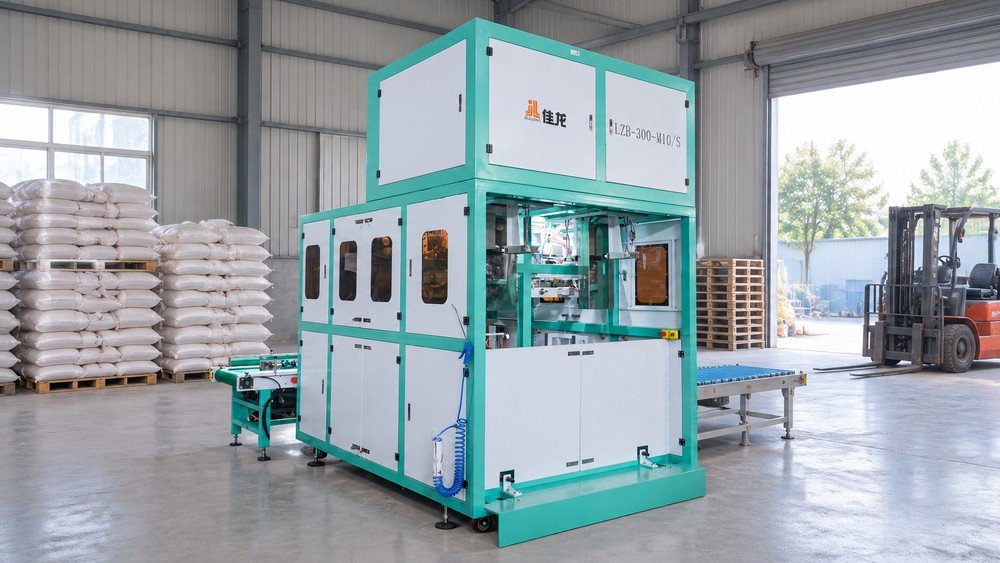
A brick of vacuum-packed rice costs about four times what the same rice costs in a woven bag, and the money does not come back from the rice. It comes from the shelf. Understand that before you price an automatic rice vacuum packing machine for 2 kg bricks, because the arithmetic of the machine and the arithmetic of the shelf are two different sums.
Loose 25 kg bags go to wholesalers who re-bag. A 2 kg brick sits on a shelf for eight months and still looks like it was packed yesterday. The margin is not in the grain. It is in who is willing to touch it.
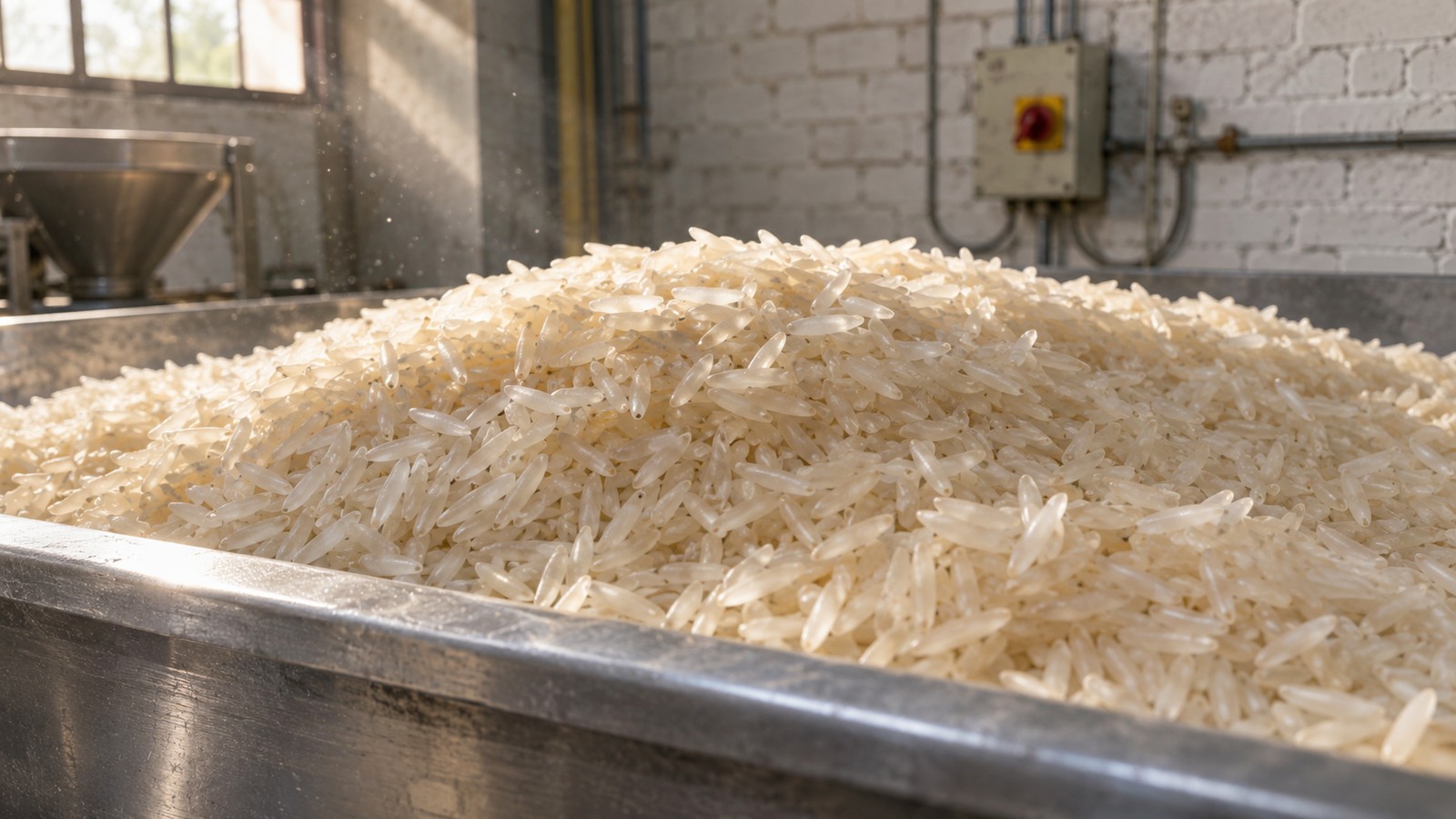
Milled rice resting in a stainless bin before the fill cycle, where bulk density decides what the next brick weighs.
What a brick actually buys
Three things, and only three. Longer shelf life without refrigeration. A shape that stacks and ships without settling. A package a supermarket accepts without argument. Everything else people say about bricks, the taste, the nutrition, the prestige, is either unchanged by the process or a story the packer tells. What changed is the number of hands the rice passes through, and whether an automatic rice vacuum packing machine for 2 kg bricks seals it once or twice on the way.
The format decides the machine before the brand does. A chamber sized for 2 kg takes the brick; the same cabinet sold as a 5 kg unit runs the heavier format at half the cycles and leaves a wrinkle at the corner where the film folds. A rice vacuum bagging machine quoted for one format usually covers that format only, and a demonstration on the lighter brick will not reveal the limit.
The four costs nobody puts in the first spreadsheet
Bag cost. A printed film bag for a rice vacuum bagging machine runs three to five times a woven PP bag of the same weight, and the printing plate is a one-time charge that only makes sense above a certain volume. Cycle time. A chamber sealing a 2 kg brick needs four to six seconds, and the film has to cool before the chamber opens. A rice vacuum bagging machine rated at 900 bags an hour in woven format does not run 900 bricks an hour.
Rejects. A brick with a fold in the seal leaks in week three, not week one, so the reject is found by the customer. Expect 2 to 4 percent in the first month and budget for it. Shape change. Two brick formats mean two sets of tooling, and an automatic rice vacuum packing machine for 2 kg bricks quoted as one model usually covers one format only. Ask which format the demonstration ran on.
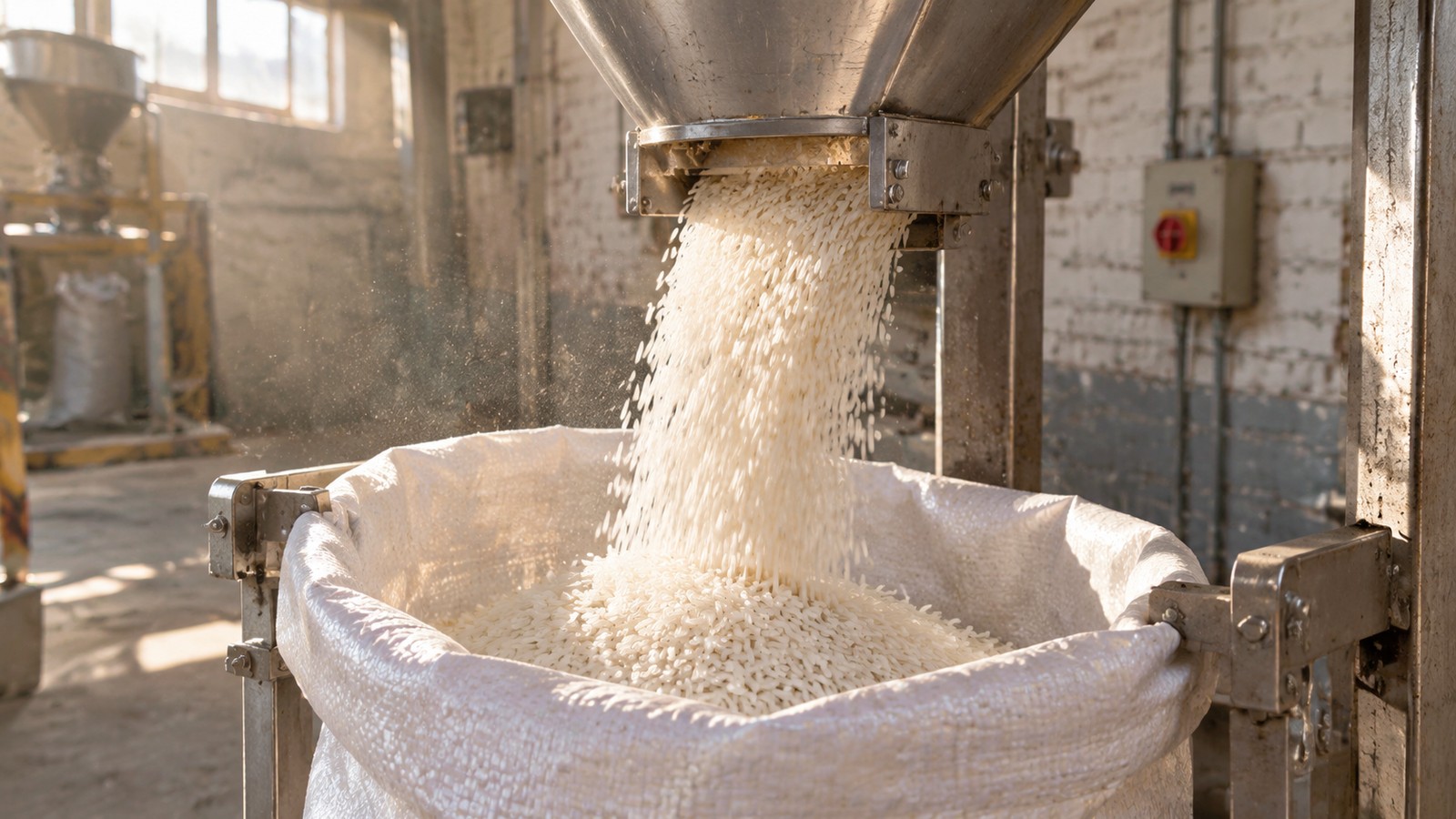
Rice leaving the feed hopper into an open bag, the moment a chamber machine cannot control.
When the brick pays
Take the retail price of the brick minus the bag, the film, the labour of the extra cycle and the reject allowance, multiply by the volume you can actually sell in that format, then compare it with the annual cost of the equipment. If the answer is smaller, the brick is a marketing project rather than a purchase.
A mill in the Mekong Delta found the sum did not pay at 2 tonnes a month. At 9 tonnes a month, with a supermarket contract, it paid in fourteen months. It was the same rice vacuum bagging machine in both years. What changed was the contract, and the format the contract allowed.
The seal is the whole product
Inspect a brick by squeezing the corners. A good seal has a visible flat band, 6 to 8 mm wide, with no wrinkle crossing it. A wrinkle crossing that band is a leak that will fail in transit, and no amount of vacuum pressure will fix it.
Ask the seller to run twenty bricks on an automatic rice vacuum packing machine for 2 kg bricks with your film, hold them 72 hours, then squeeze every corner. A rice vacuum bagging machine that cannot hold a clean band on your film makes you inspect every bag by hand for the rest of its life.
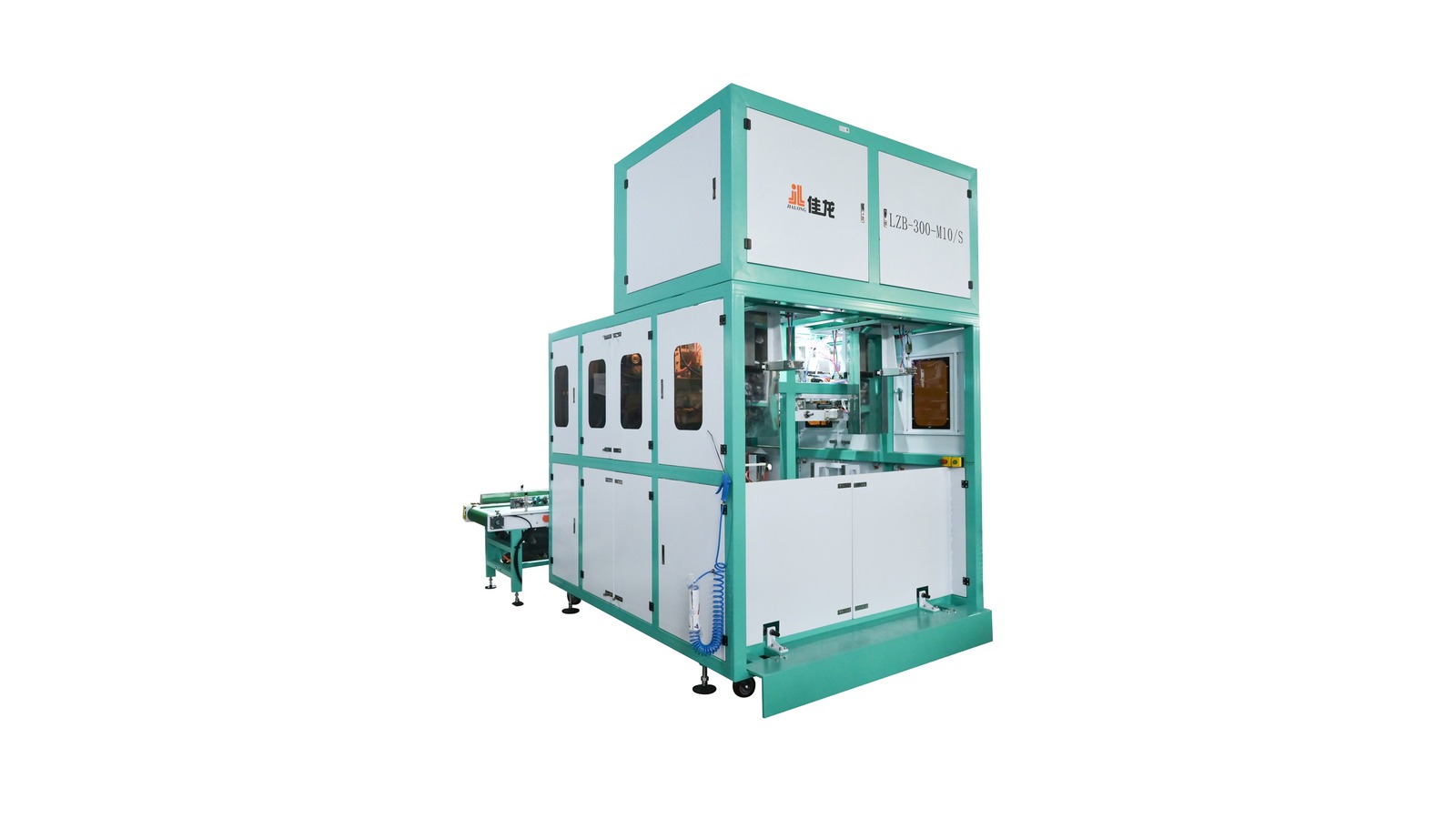
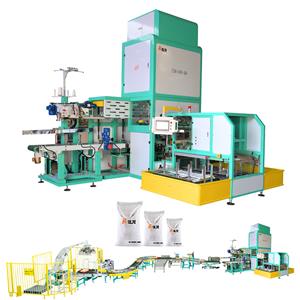
The two-tier vacuum cabinet on a white background: infeed conveyor at the left, chamber and seal bar behind the panels.
What to specify in the enquiry
Before any of that, confirm the format. An automatic rice vacuum packing machine for 2 kg bricks is a different purchase from one built for 5 kg, and the bag weight and shape decide it. Film structure and thickness. Bricks per hour at that weight. Seal band width. Chamber or nozzle. And the question most buyers forget: the changeover time between the 2 kg and the 5 kg format. That last number is usually the difference between one automatic rice vacuum packing machine for 2 kg bricks and two.
Most mills discover it after the deposit, and the discovery is expensive, because a second unit is not a second machine. It is a second room.
Ask one more thing before you sign: run the rice vacuum bagging machine at your own film thickness, not the film in the demonstration room.
Zhangzhou Jialong Technology Co., Ltd. builds the rice vacuum packing machine and the automatic rice vacuum packing machine for 2 kg bricks in Zhangzhou, and quotes against the film you actually run rather than against a demonstration reel. The range sits at https://jialong-packing.com/, and export@jialong.cn or +8613806951676 will send a written figure for your brick format.