Where Drift Starts on a Rice Weighing and Bagging Machine
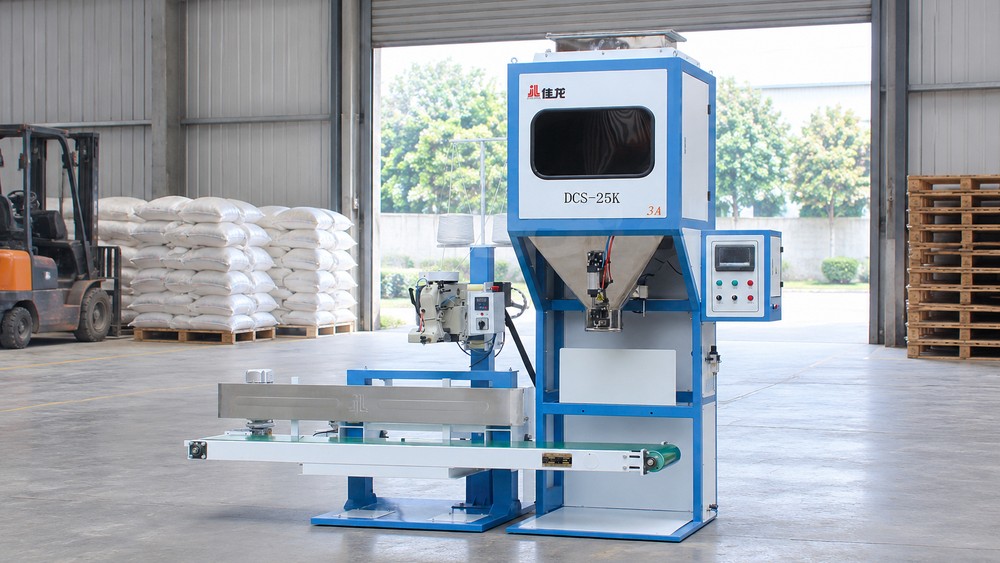
An automatic rice weighing and bagging machine for 25 kg bags does not drift because it is old. It drifts because something upstream changed and nobody told the machine. Find the something and the drift stops.
That is the whole argument, and it takes about four hours to act on. Everything below is a check you can run with a calibrated scale, a feeler gauge and a pressure dial, in the order of how often each one turns out to be the answer.
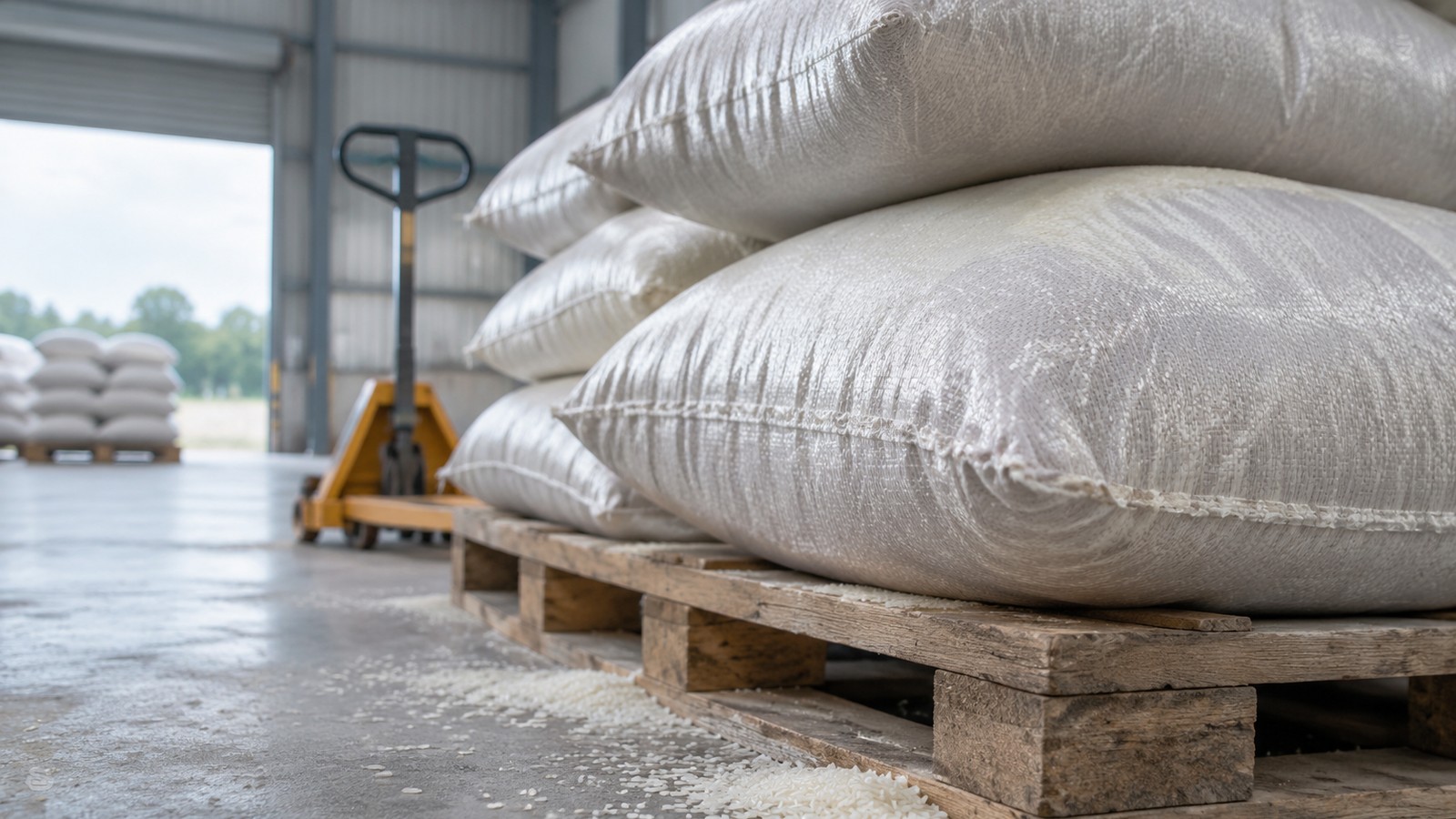
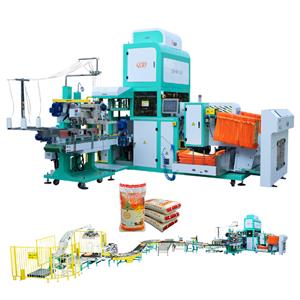
Rice held in the weigh hopper above the discharge doors, the point where a dry crop and a humid crop leave at different speeds.
Watch the range, not the average
Once an hour, empty a bag onto a static scale that was calibrated this year and write the number on a board. One bag, taken at random, not the average of ten. You are looking for the range, and the range is what the buyer at the other end of the pallet experiences.
A rice weighing and bagging machine for 25 kg bags that produces 24.96, 25.02, 25.01 and 24.99 has a range of 60 grams and is fine. The same mean with a range of 140 grams is drifting, even though the average is perfect and the operator swears nothing changed. Write the four numbers, not the four-bag mean.
Cause one: the product changed
Rice from a different field, or from the same field three weeks later, flows differently through an automatic rice weighing and bagging machine for 25 kg bags. A new crop is drier and runs faster. Rice that has taken moisture from a humid week runs slower and compacts in the hopper. Both move the machine out of tolerance with nothing broken.
Test it in ten minutes. Take a sample from the silo, fill a fixed one litre measure, weigh it, and compare with the number you recorded last month. A bulk density change of 3 percent is enough to shift a weighing and bagging machine for 25 kg out of tolerance, and the cure is a re-set rather than a repair.
Cause two: the feed gate is wearing
The coarse gate on a linear weigher opens and closes sixty thousand times a month, and the edge rounds off. A gate that has lost a millimetre of edge passes more product in the fast phase, which stays invisible until the fine phase can no longer correct it.
Measure the gate opening on any automatic rice weighing and bagging machine for 25 kg bags with feeler gauges every quarter. Two hundredths of a millimetre a year is normal wear. A millimetre is a replacement, and it is cheaper than the bags that go out light in the month before anyone measures.
Cause three: air pressure fell
Most machines on a rice bagging line run on 0.6 MPa. When the compressor cycles or a leak opens downstream, the clamps close slower and the gate opens late. The symptom is a shortfall on every third or fourth bag rather than on all of them, which is exactly what makes it look random to the operator.
Put a gauge on the air line feeding the automatic rice weighing and bagging machine, not on the compressor, and read it at the start of the shift, at lunch and at the end. A drop of 0.05 MPa between readings is a leak worth finding before it becomes a service call.
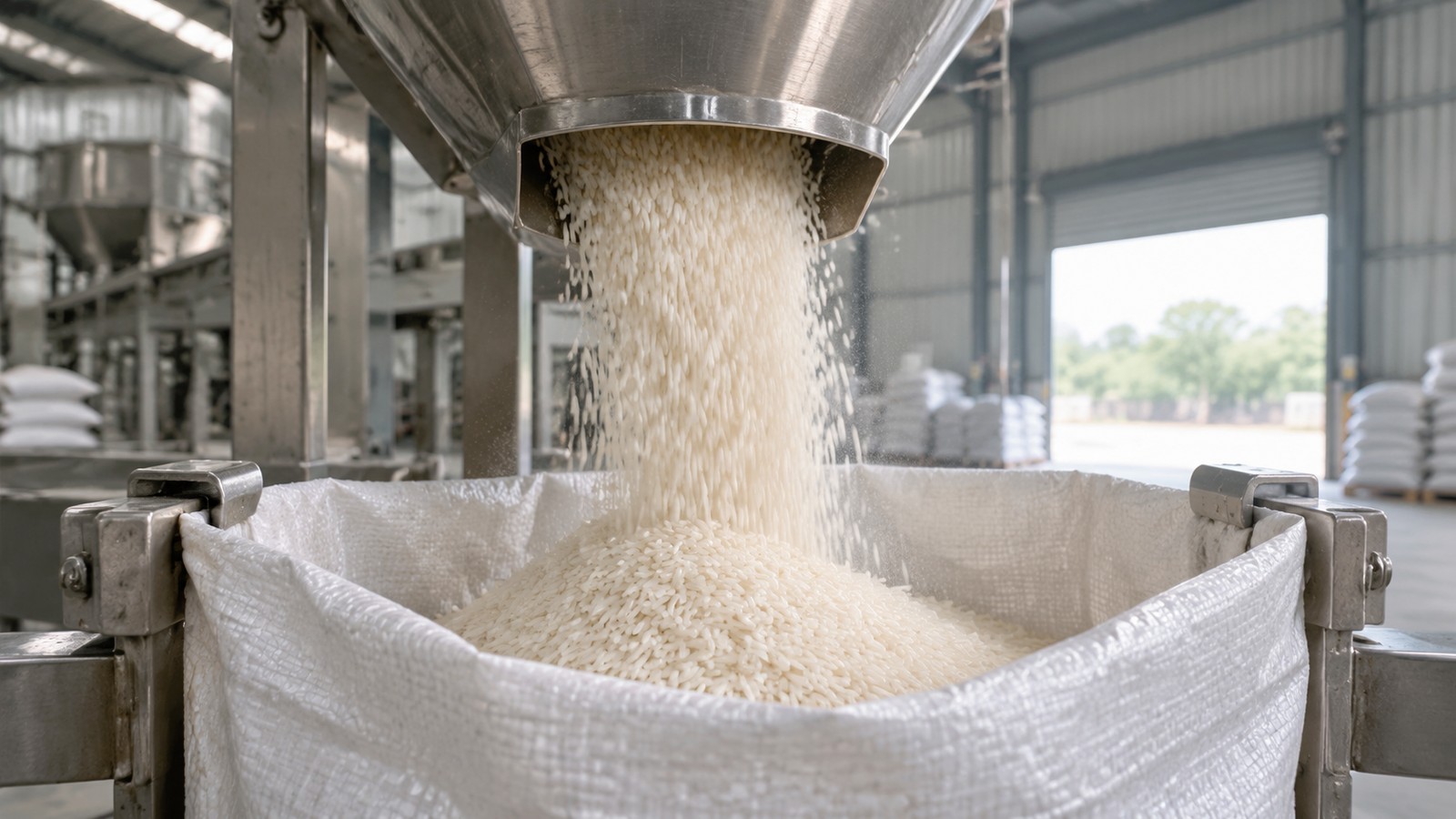
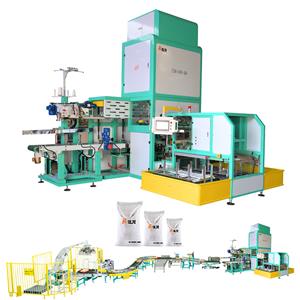
Rice falling from the discharge spout into a woven sack, the single bag that must be weighed on a static scale once an hour.
Cause four: the load cell is loaded wrong
Rice dust on the load cell cover, a bag resting against the weigh hopper, a cable touching the frame. All three add an offset, and all three are found by looking rather than by testing. Run the weighing and bagging machine for 25 kg empty for ten cycles and watch the zero. It should sit still.
A zero that wanders by 20 grams with nothing in the hopper is not a calibration problem, and no amount of calibration will fix it. Clean the cover, clear the contact, and run the ten cycles again before calling anyone.
Cause five: somebody changed a setting
The most common cause and the least admitted. A night operator adjusted the fine feed to stop a bridging problem and the change was never written down. Keep a card in the cabinet door with the date and initials of every change, not to blame anyone but to know what the machine was doing last week.
An automatic rice weighing and bagging machine for 25 kg bags has a memory problem rather than an accuracy problem in about half the cases that reach a technician. The card is the memory.
The order to check things
Product, air, zero, gate, settings. In that order, because it is the order of likelihood and the order of cheapness. A rice packing machine checked in that order on a rice bagging line is usually fixed before anyone opens a toolbox.
If all five come back clean and the drift remains, it is a calibration problem and the technician is the right call. Not before. The order matters more than the diagnosis, because the order is what a shift supervisor can follow at two in the morning.
The drift that is thermal
A load cell warms up and drifts, and the drift is largest in the first hour after a cold start. A machine calibrated cold reads 3 to 8 grams light once it is warm. Calibrate after a twenty minute warm up, not before, and compare the first ten bags of a shift with the last ten of the previous one.
That comparison catches the drift on a rice weighing and bagging machine for 25 kg bags before the buyer does, and it costs nothing but a line on the shift sheet.
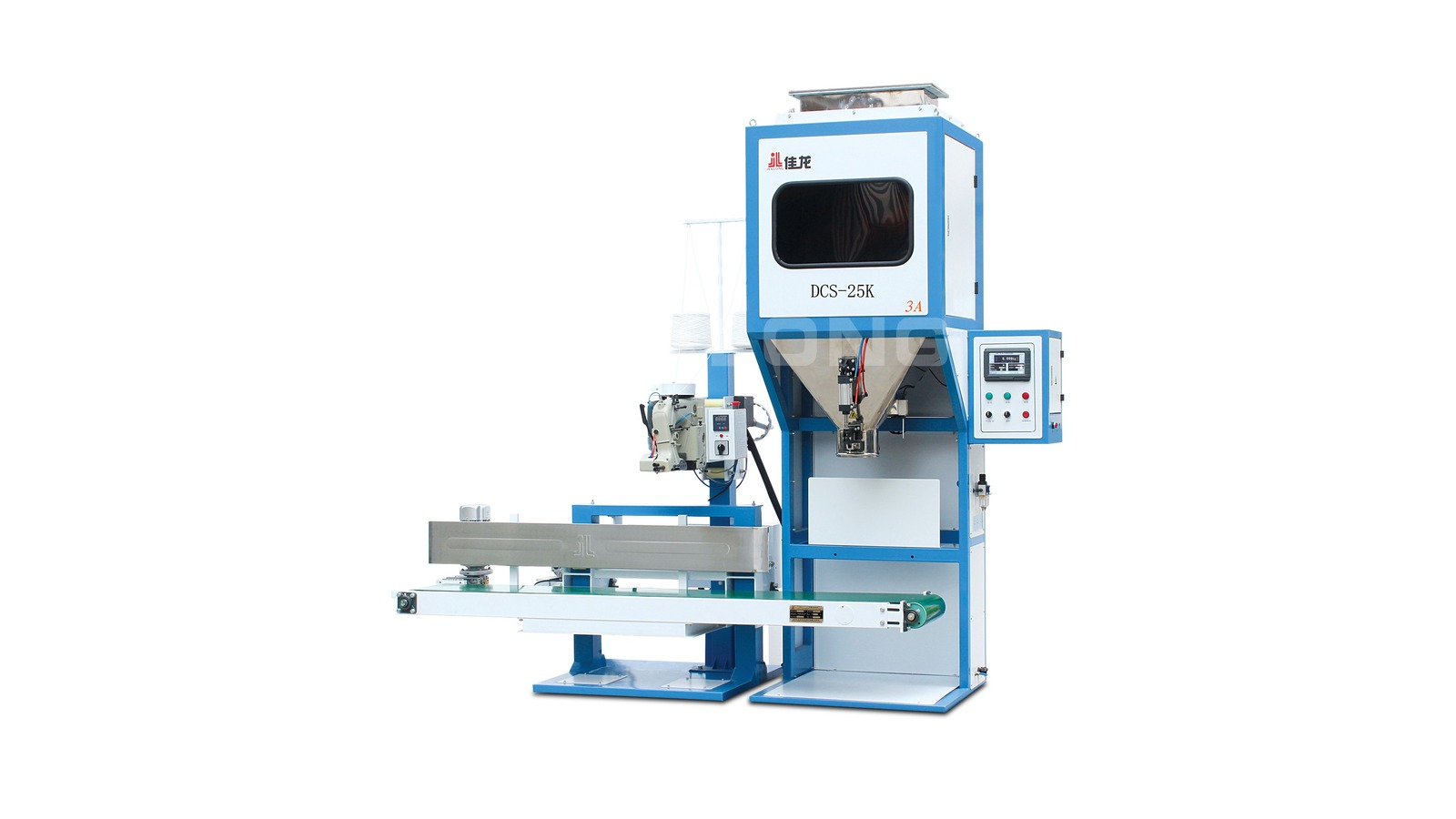
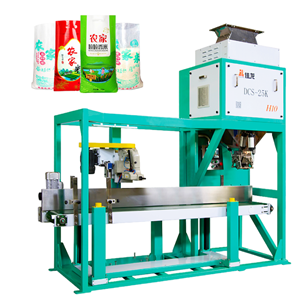
White-background bagging scale with hopper, weighing head, sewing head and takeaway conveyor, the frame the four-column card belongs to.
What to write on the card
Four columns: time, product, single bag weight, air pressure. Four lines a shift, twelve weeks, and you have a record that answers the question before the technician asks it. An automatic rice weighing and bagging machine that has never been logged has never been diagnosed, only repaired.
Zhangzhou Jialong Technology Co., Ltd. builds the automatic rice weighing and bagging machine for 25 kg bags and the rice bagging line in Zhangzhou, and supplies the gate wear limits, the air pressure window and the warm-up procedure with the manual rather than on request. The grain bagging range sits at https://jialong-packing.com/, and export@jialong.cn or +8613806951676 will send the four-column card filled in for your product.
Send the daily tonnage, the bag size, the bulk density of this month's rice and the air supply at the wall, and the weighing and bagging machine for 25 kg can be matched to the crop you actually run. Those four numbers decide whether the drift you are chasing belongs to the weighing and bagging machine for 25 kg or to the product, and only one of them is worth a service call.