The Biochemistry of Bean Spoilage: Engineering the Right Vacuum Seal
The Biochemistry of Bean Spoilage: Engineering the Right Vacuum Seal
Published on: March 18, 2026 | By Jialong Engineering Desk
Open a bag of legumes stored for six months in standard single-layer film. The smell hits you before the product does. That rancid, slightly paint-like edge underneath the earthy grain smell — that is lipid oxidation. It is not a storage problem. It is not a supplier problem. It is a packaging engineering failure. A correctly specified vacuum packaging machine for legumes, paired with a verified barrier film for legumes, makes that failure physically impossible. The chemistry is not complicated. But it is unforgiving.
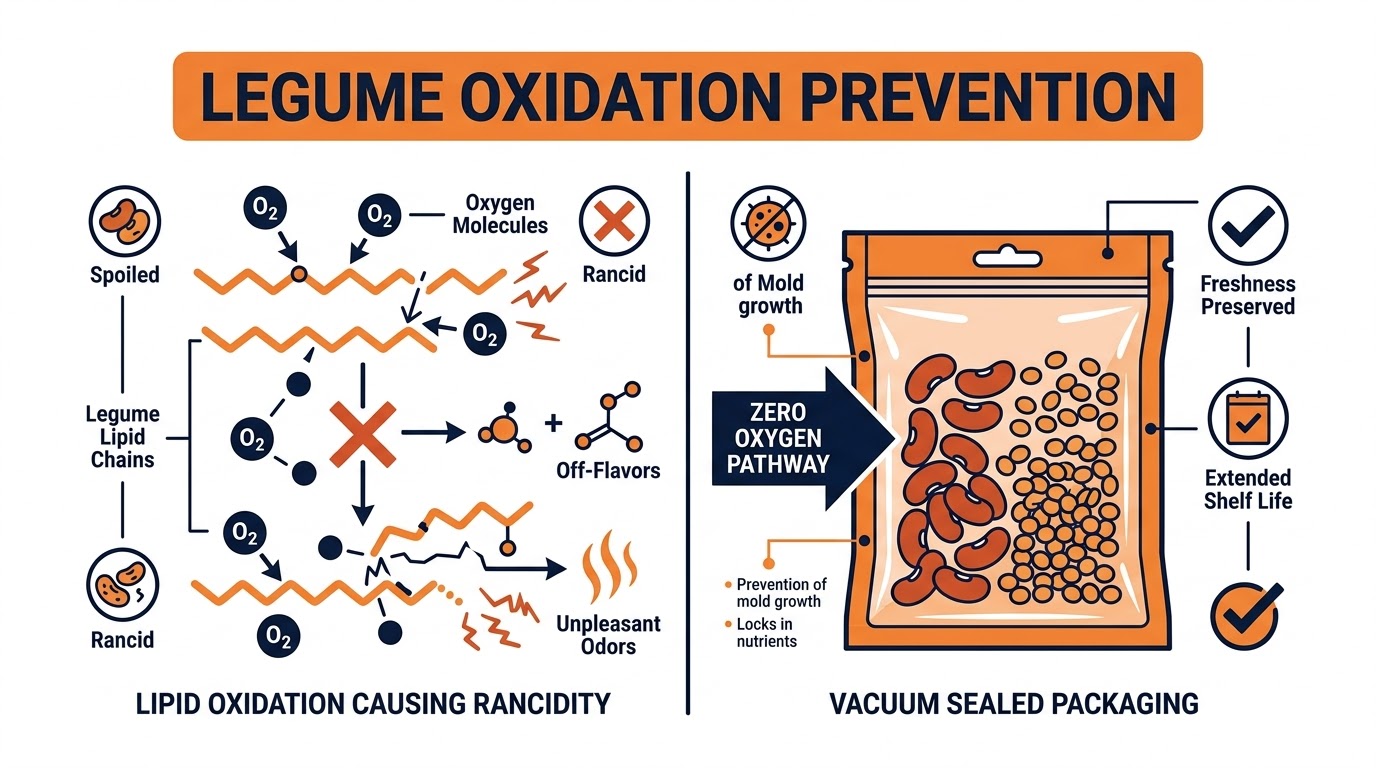
Figure 1: Removing oxygen below 0.5% residual concentration shuts down lipid oxidation and aerobic mold pathways simultaneously.
Soybeans carry linoleic acid concentrations of 50–55%. Peanuts run 26–28% oleic acid. Black-eyed peas are lower in fat but rich in B vitamins — thiamine, riboflavin, folate — that degrade rapidly under oxygen and UV exposure. These are not abstract shelf life statistics. They are specific chemical vulnerabilities that a vacuum packaging machine for legumes is engineered to neutralise.
Lipid oxidation in legumes follows a predictable chain reaction. Atmospheric oxygen attacks the double bonds in unsaturated fatty acids. Hydroperoxides form. These decompose into aldehydes and ketones — the exact compounds responsible for rancid off-flavour. The critical threshold is 2% residual oxygen. Above it, oxidative degradation proceeds at a commercially destructive rate. Below 0.5%, the reaction stalls almost entirely. That 0.5% figure is the engineering target every bean vacuum packaging system must be built around.
Aspergillus flavus does not survive below 1% oxygen. This matters enormously for legume processors targeting export markets. Aflatoxin B1 — the carcinogenic mycotoxin produced by A. flavus under aerobic conditions — is one of the most tightly regulated food contaminants in global trade. The EU maximum limit sits at 2 micrograms per kilogram of total aflatoxins. A single contaminated batch triggers full-lot rejection at customs. Not individual product pulls. Full lot.
Proper bean vacuum packaging does not slow mold growth. It removes the oxygen dependency that aerobic mold requires to metabolise at all. This is the scientific basis for vacuum sealed beans shelf life extending reliably past 18 months under ambient storage conditions. It is not preservation. It is the elimination of the biological preconditions for spoilage.
The same logic applies to stored-product insects. Weevils, grain moths, and bean beetles require oxygen for respiration. Eggs present in raw material at packing cannot hatch in a sub-1% oxygen environment. A vacuum packaging machine for legumes equipped with sufficient extraction depth solves the infestation problem at a physical level — without fumigation, without chemical treatments, and without the compliance documentation burden those methods carry in regulated export markets.
Legume oxidation prevention starts with the film specification, not the machine. The machine executes the evacuation. The film determines whether that evacuation holds for one week or 18 months.
Minimum viable specification for export-grade legume packaging: OTR below 8 cc/m²/day at 23°C. MVTR below 5 g/m²/day at 38°C. Film thickness 80–100 microns. The structure that hits these numbers is a co-extruded laminate — BOPA outer layer for puncture resistance against angular bean geometry, EVOH core for oxygen barrier performance, CPP inner layer for thermal seal strength and food-safe contact compliance.
Single-layer PE film has an OTR of 2,000 cc/m²/day or higher. Running it through a vacuum packaging machine for legumes creates a package that looks sealed and provides almost zero barrier performance. The bag is cosmetically vacuum-packed. Chemically, it is open to the atmosphere. The barrier film for legumes is not a secondary specification. It is the primary component in the preservation system.
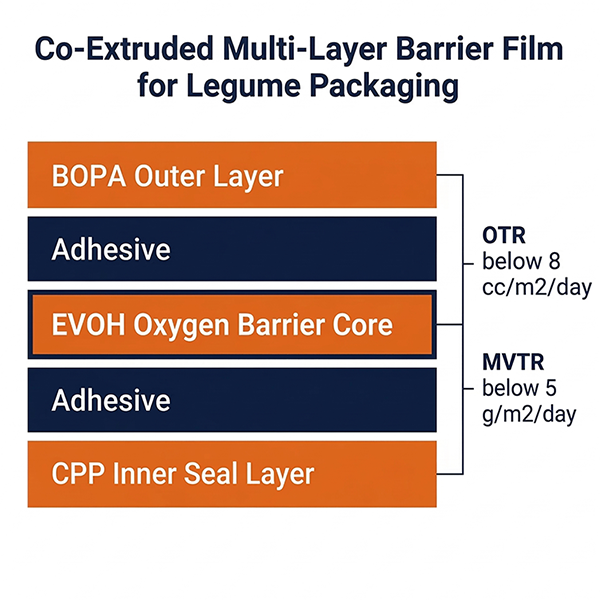
Figure 2: EVOH core layer delivers the oxygen transmission rate required for commercial vacuum sealed beans shelf life.
The Engineering Reality
Cheap baggers and single-layer film cannot deliver legume oxidation prevention. The chemistry does not allow for shortcuts. Linoleic acid oxidises. Aspergillus grows. Weevil eggs hatch. In substandard packaging, all three processes begin immediately after sealing. A correctly specified vacuum packaging machine for legumes, running verified co-extruded barrier film for legumes with a calibrated thermal seal jaw, eliminates all three simultaneously — not as a marketing position, but as a measurable chemical outcome that holds for the full export and retail cycle.
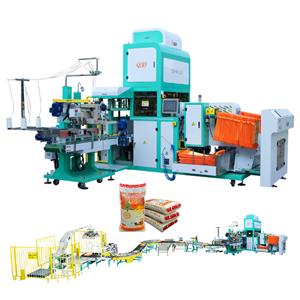
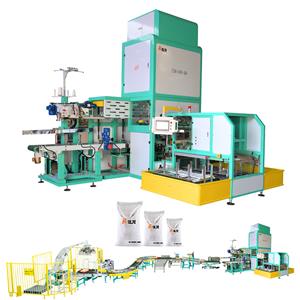
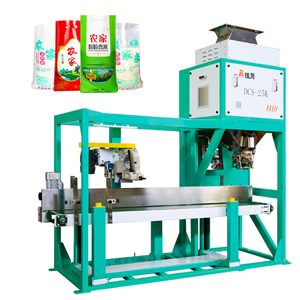
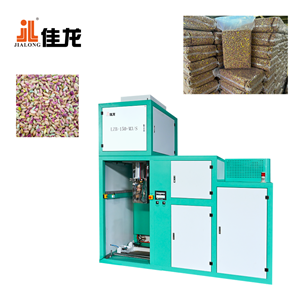
Jialong builds extraction systems with anti-fragmentation manifolds that protect whole bean geometry under full vacuum load, seal jaws calibrated to ±1.5°C across the full seal width, and complete compatibility with EVOH-core laminate films across all standard gauges. The bean vacuum packaging your supply chain requires starts with the right engineering decisions at the equipment level.