Pet Food Vacuum Packaging: Aroma Retention, Fat Oxidation Control, and Kibble Protection
Pet Food Vacuum Packaging: Aroma Retention, Fat Oxidation Control, and Kibble Protection
Published on: June 17, 2026
A pet food packaging machine should protect the product's intended aroma and nutrition without turning the pack into a hard block of broken kibble. Vacuum sealing helps because oxygen accelerates fat oxidation and can reduce the stability of sensitive aroma compounds. The packaging process still needs measurable control.
Dry dog food, cat food, soft treats, and high-fat formulas do not respond the same way. The correct machine setup depends on residual oxygen target, moisture control, kibble strength, film barrier, seal strength, and cleaning access.
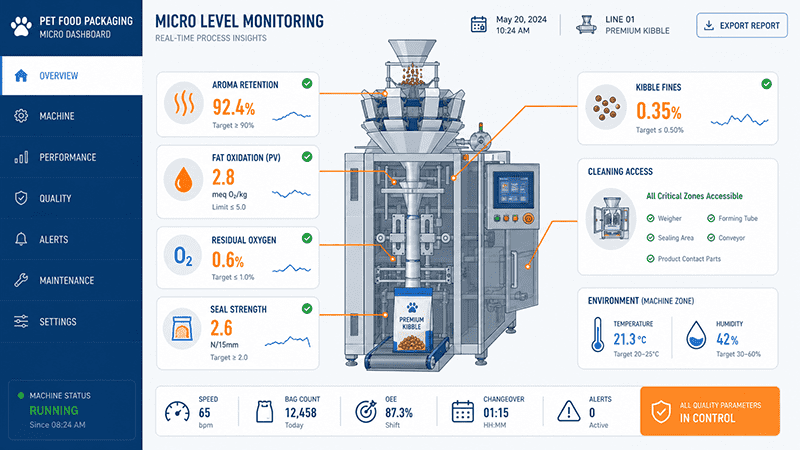
Oxygen Control Protects Fat and Aroma Stability
Many pet foods contain fats, oils, meat meals, palatants, vitamins, and aroma compounds that are sensitive to oxygen exposure. A dog food packaging machine should reduce oxygen contact without creating a package that damages kibble structure or traps excess moisture.
Residual oxygen should be measured after sealing and after storage simulation. If oxygen returns through a weak seal or poor barrier film, the package may still look acceptable while aroma and fat quality drift.
| Packaging target | Risk if ignored | Machine check |
|---|---|---|
| Residual oxygen control | Faster oxidation of fats and aroma drift | Record residual oxygen after the pet food packaging machine cycle |
| Seal integrity | Air return and moisture ingress | Vacuum decay and peel strength test |
| Kibble protection | Broken kibble and excessive fines | Measure fines before and after vacuum sealing |
| Cleaning access | Fat residue and cross-contact risk | Inspect chamber, belts, chutes, and seal area access |
Palatability Depends on Consistency, Not Hype
Dogs and cats rely strongly on smell, but packaging cannot turn a poor formula into a high-quality product. A food packaging vacuum machine protects the formula's intended aroma profile by reducing exposure to oxygen and outside odors. That helps the product remain more consistent from production to feeding.
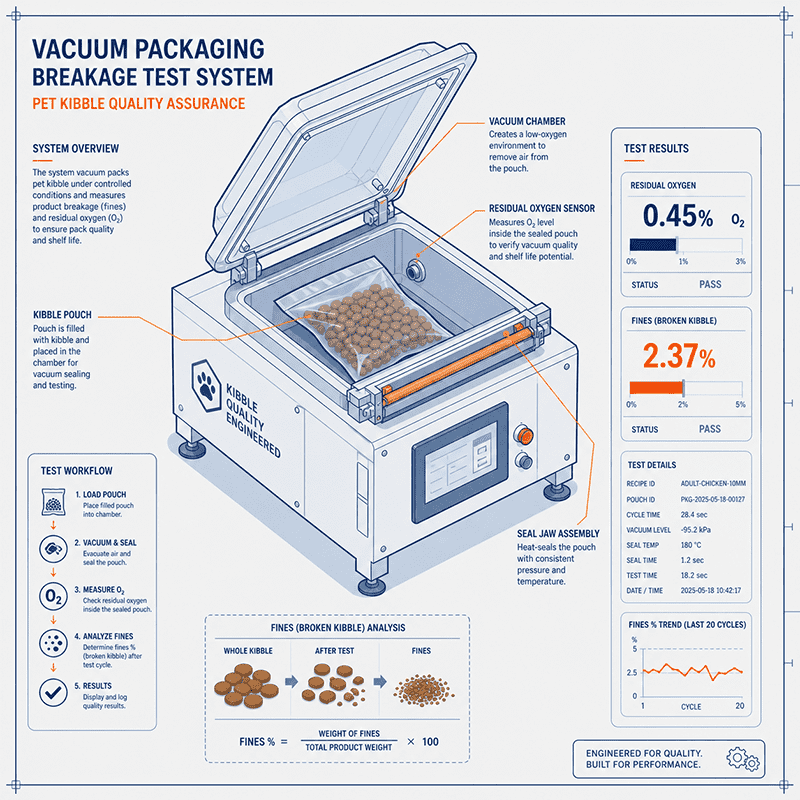
The test should be practical. Compare aroma retention, peroxide value or other oxidation indicators where applicable, kibble fines, seal leakage, and package condition after storage. A pet food packaging equipment trial should include the final formula and final bag.
Regulatory and Labeling Context Matters
FDA states that pet food is regulated similarly to other animal foods and must be safe, produced under sanitary conditions, contain no harmful substances, and be truthfully labeled. Packaging and food-contact materials should be reviewed as part of the safety file.
AAFCO explains that pet food labels are highly regulated at federal and state levels, and labeling covers more than the physical container. Packaging claims about freshness, nutrition, or preservation should match the evidence the producer can support.
External references: FDA Pet Food, AAFCO Labeling Requirements, and ISO 22000 food safety management.
Commissioning Checklist
Run the pet food packaging machine with the final formula, final bag, and final film.
Record residual oxygen, vacuum decay, seal strength, and package firmness.
Measure kibble fines before and after vacuum sealing.
Check fat residue control, cleaning access, and seal-area cleanliness.
Match packaging claims with documented preservation and labeling evidence.
Contact our engineering team directly:
Email: export@jialong.cn
WhatsApp: +86-136-2579-4992
Products: pet food packaging machine