Precision Micro-Dosing: Engineering the Shift to Modular Rice Formats
Precision Micro-Dosing: Engineering the Shift to Modular Rice Formats
Published on: April 13, 2026 | By Jialong Mechatronics Engineering
The traditional 10kg bulk vacuum bag represents a fundamental failure in product lifecycle engineering. The moment the end-user breaks the factory seal, the protective anaerobic environment vanishes. Ambient humidity and oxygen flood the grain mass, accelerating the degradation of volatile aromatics. To solve this post-opening spoilage, advanced processing facilities are transitioning to modular rice packaging. This involves dividing a standard 5kg unit into four distinct 1.25kg isolated vacuum bricks. However, stepping down to micro-formats introduces severe speed and accuracy bottlenecks. You cannot execute profitable modular rice packaging using outdated volumetric cup fillers. It requires an advanced rice vacuum packaging machine strictly synchronized with a high-speed multi-head dosing system.
At 1.25kg increments, a tolerance deviation of just ±10 grams per cycle results in massive daily product giveaway or regulatory underweight fines. A precision multi-head dosing system utilizes 14 to 20 independent weighing hoppers. The algorithms calculate the optimal combination of hoppers to achieve a ±1g target accuracy in milliseconds. As the multi-head dosing system releases the precise grain load, the integrated rice vacuum packaging machine must instantly index, shape, and evacuate the pouches at speeds exceeding 60 units per minute to maintain industrial throughput viability. This mechanical synchronization is the backbone of modern modular rice packaging.
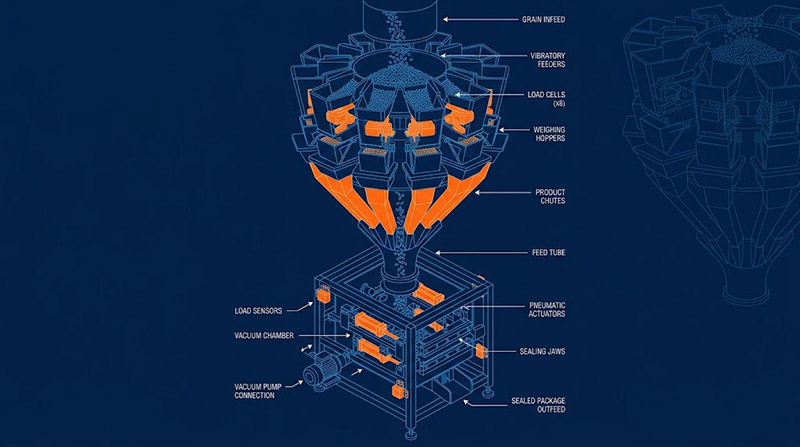
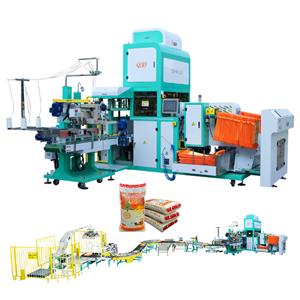
Figure 1: Isometric blueprint detailing the vertical integration of a multi-head dosing system into the core rice vacuum packaging machine architecture.
Thermodynamics of Biodegradable Films
The second critical engineering challenge in modular rice packaging is the material science conflict. Standard multi-layer polymers generate excessive plastic waste when multiplied into smaller formats. The industry is aggressively shifting toward plant-based, nano-coated high barrier composite film. However, biodegradable high barrier composite film possesses a disastrously narrow thermal operating window.
If the thermal jaws run 3°C too hot, the plant-based matrix melts and adheres to the Teflon tape. If it runs 3°C too cold, the micro-capillaries fail to fuse, and the vacuum collapses within 48 hours. Mastering this material requires highly calibrated vacuum sealing technology. A heavy-duty rice vacuum packaging machine utilizes closed-loop PID temperature controllers that monitor the jaw surface at 100hz. By applying this elite vacuum sealing technology, we achieve a flawless thermal weld on eco-friendly high barrier composite film.
You no longer have to choose between a hermetic seal and environmental compliance. When your rice vacuum packaging machine runs a synchronized multi-head dosing system and deploys adaptable vacuum sealing technology, you process cutting-edge high barrier composite film with zero defect rates.
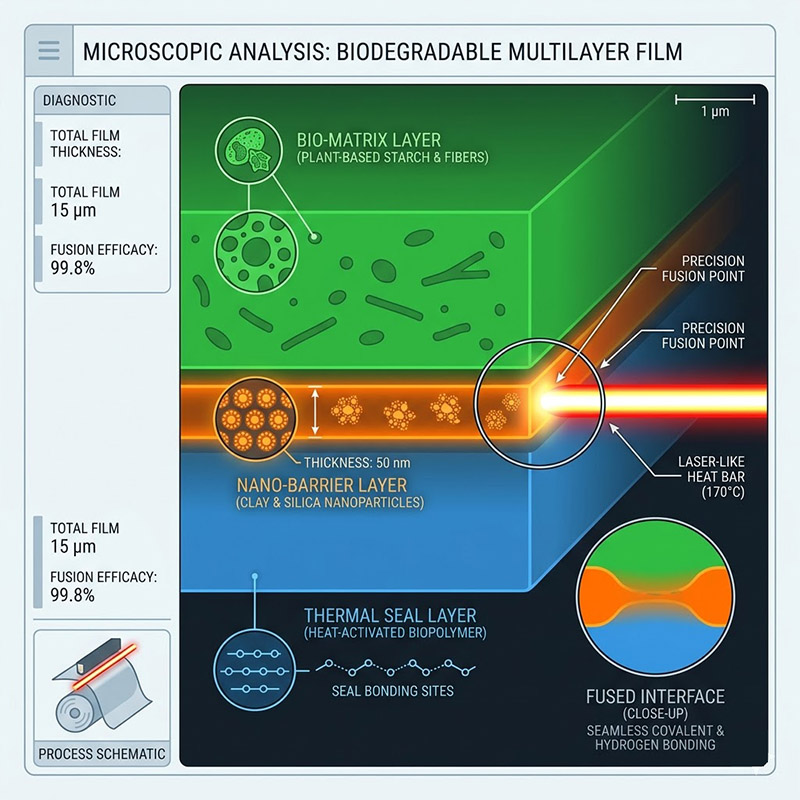
Technical Note: Advanced nano-coatings applied to the high barrier composite film ensure identical oxygen transmission rates (OTR) to standard aluminum foils, provided the vacuum sealing technology is precisely calibrated.