What Data Connectivity Changes on a Granular Packing Line
Open any equipment brochure today and you will find the word "smart" somewhere on the cover. For a granular packing buyer, that word means little until it translates into what the line does differently on a Tuesday afternoon. The honest answer is narrower than the marketing, and more useful. Packaging line automation earns its cost where stops, drift and handovers meet, and almost nowhere else. One question that separates real vendors from brochure writers: how does the packaging line automation behave when the bag format changes mid-shift?
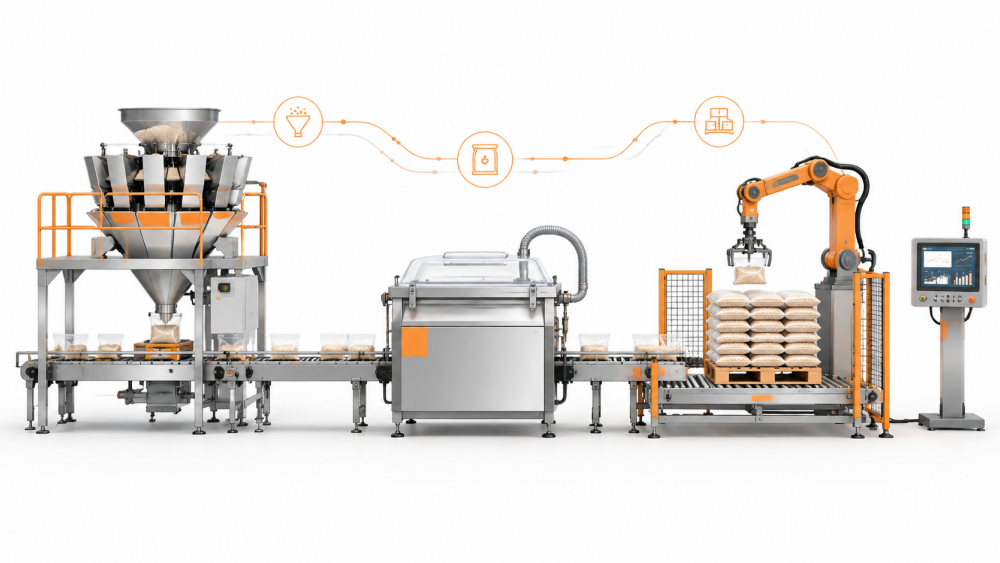
Stop reasons become visible: On a manual line, micro-stops vanish into the shift. Nobody totals them, so nobody fixes the pattern. A connected packaging line automation layer logs each stop with a timestamp and a reason code. Within two weeks the Pareto is obvious, and it is almost never what operators assumed. That visibility alone frequently justifies the packaging line automation investment, because it converts complaints into a ranked fix list. Recipe changes are exactly where this pays off: stored parameters per product category prevent manual drift. A packing line machine that logs seal width, jaw temperature and dwell time per batch gives you a traceable reason when a seal fails. A packing line machine service agreement should be measured against downtime cost, not against the original invoice.
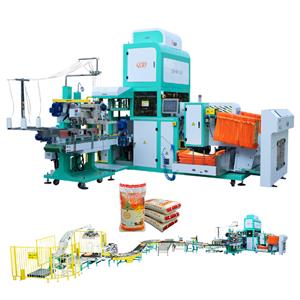
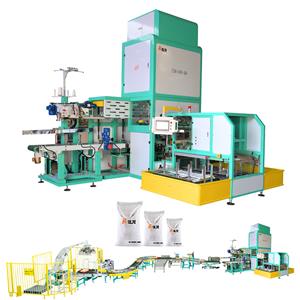
Commission an integrated packaging line one station at a time, then run the whole chain. On a granular product project, the first full changeover usually exposes the imbalance that isolated tests missed.
Drift gets caught early: Fill weight distribution spreads. None of these announce themselves; they accumulate as equipment wears. Trending those values across days turns slow drift into a visible slope, and the packing line machine gets serviced when the data says so rather than when the calendar does. The saving per event is small. It accumulates through avoided quality holds. For high-value seeds and nuts, a properly sealed batch often protects more money than the packaging film itself costs. A water-bath bubble test on sampled industrial vacuum packaging bags still catches small leaks that no dashboard sees. Operators who understand why settings change between products reach stable output faster than those who follow a checklist blindly.
What connectivity does not fix: An integrated packaging line with poor mechanical build stays a poor line. Dashboards just report its failures more promptly. Data layers add failure modes of their own too: network outages, software updates, configuration errors. Basic line function must survive disconnection. Specify the line to run standalone, then add the data layer on top. Before signing, ask the automatic packaging line vendor for a recorded changeover rather than a polished run on one pre-set product.
An automatic packaging line needs one owner for the shift report. On a granular product line, shared responsibility usually means the slow drift between stations goes unnoticed until bags start rejecting.
Specifying it sensibly: Ask each bidder which parameters are logged, in what format, and whether they export to standard tools rather than a proprietary screen. Industrial vacuum packaging equipment increasingly supports open protocols. Zhangzhou Jialong Technology Co., Ltd. documents its automation options and data interfaces at https://jialongpacking.com/ for teams writing specifications. A fragile grain, an oily seed and a sticky powder make different demands on industrial vacuum packaging, so a common setting is usually a compromise.
Store the integrated packaging line trial results next to the recipe, so the next operator starts from evidence instead of anecdote.
An automatic packaging line that reports its own stops, batch counts and material changes is useful only if someone reads the reports. For most granular plants, start with shift-level data, then decide whether deeper connectivity pays for itself. The machine does not need to be smart; the workflow does.
Connectivity on an integrated packaging line should answer questions the shift supervisor already asks: why did the line stop, which product changed, which station lost time. An automatic packaging line with those answers in one place beats a dashboard nobody opens. Industrial vacuum packaging gains the most when the data leads to a decision.