How to Configure a 5–25 kg Rice Packing Line for Open-Mouth Bags
The specification for a 5–25 kg rice packing line starts with the bag leaving the line, not with a machine list. Target weight, open-mouth construction, closing method and the condition required at the next handling stage set the basis for the design. With those details established, the weighing, bag feeding, filling, sewing and conveyor sections can be matched without unnecessary transfers.
Start with the bag and the rice
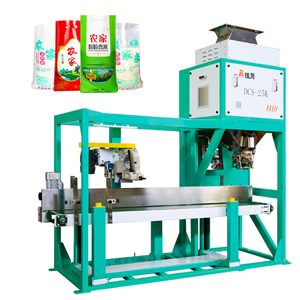
Open-mouth woven polypropylene and paper bags behave differently in automatic handling. Mouth stiffness, inner liner, surface friction and dimensional tolerance all affect pickup and clamping. Gripper settings that work with a stable woven bag may not suit a softer paper bag. Test printed samples from the intended supplier before finalizing the bag magazine and opening device.
Product characteristics matter just as much at the filling stage. Long-grain, short-grain, polished and mixed rice can differ in bulk density and flow behavior, while broken-grain level and dust affect final feed and the cleanliness of the seal or sewing area. The same rice packing line may handle these products, but feeding settings, weighing cut-off and commissioning quantities will change.
How the process fits together
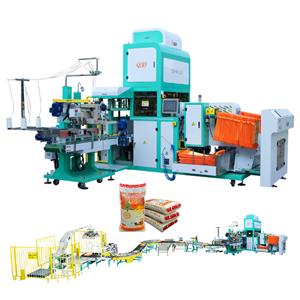
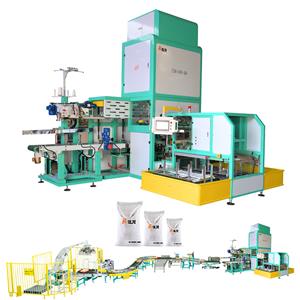
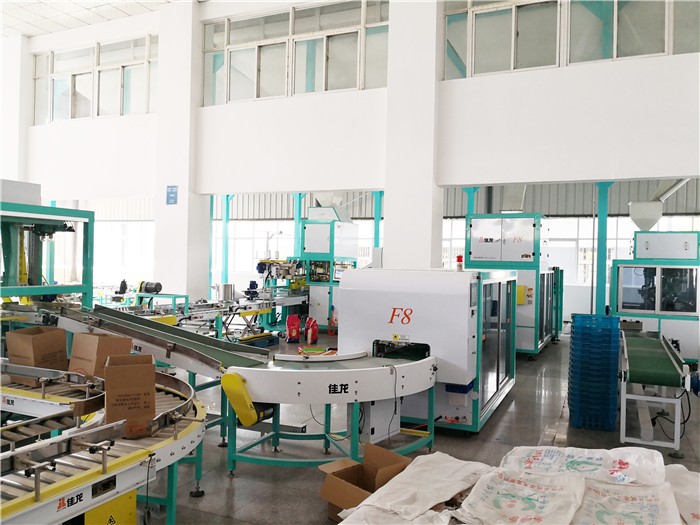
Jialong's verified 5–25 kg rice packing machine line combines automatic weighing, bag feeding, filling, sewing and conveying. It is a sound process sequence, provided the interfaces receive the same attention as the individual machines.
Product supply: the upstream hopper keeps the weighing unit fed without surging or starvation.
Automatic weighing and filling: controller settings are developed with the actual rice and target bag weight.
Bag presentation: the empty bag opens, locates and clamps consistently before discharge starts.
Bag closing: controlled top clearance and stable support keep the filled bag aligned as it enters the sewing head.
Finished-bag transfer: the bag sewing conveyor carries the package without twisting it or pulling the seam off line.
Conveyor height and speed need to match the filler and sewing head. Too much drop lets the product settle abruptly and distort the bag mouth. Poor support at the sewing point loads the seam before the thread is secure. Both are line-integration problems rather than adjustments confined to the sewing machine.
Choosing downstream modules
Metal detection, checkweighing and palletizing belong in the project when the plant specification calls for them; they are not automatic requirements for every rice packing line. Jialong's rice bagging and palletizing configuration shows how these modules can form part of a larger line. Selection comes down to the product-control plan, local compliance requirements, floor space and the way finished bags are stored or dispatched.
Keep the line boundary clear.
The bagging line can deliver a consistent finished bag. It cannot correct unstable upstream flow, poorly made bags or an undefined pallet pattern. Assign ownership of those inputs before approving the equipment layout.
Preparing for the factory test
Representative material and production bags make the test worthwhile. Use rice that reflects normal production variation rather than a specially screened batch, and supply bags with final printing, liner and dimensions. The test brief also needs the target weight, agreed weight-control method, bag-closing requirement, expected output range and the plant's electrical and compressed-air conditions.
Watch for reliable bag pickup, opening and clamping without frequent manual correction.
Check filled-bag weight using the agreed sampling and reference-scale procedure.
Inspect top clearance, seam position, thread cutting and bag-mouth cleanliness.
Run the planned bag sizes and product grades, including a changeover where applicable.
Observe alarms, restart behavior and transfer to any detector, checkweigher or palletizer.
Write the acceptance criteria before the trial. Because output varies with the rice, bag size, bag quality and line configuration, a headline machine speed says little on its own. Define the rice packing line run time, which interruptions count, how weights are checked and which finished-bag defects are unacceptable.
Factories comparing layouts can begin with the automatic packing line range. The final proposal still has to follow the actual bag route, available headroom, operator and cleaning access, and the location of downstream warehouse equipment.
Bring the working details into the line discussion.
For a configuration review, send the rice type, target bag weights, production bag samples, required output range, layout drawing and preferred automation level to export@jialong.cn or call +86-13625794992.