25–50 kg Grain Bagging Line for Woven PP and Paper Bags
At 25–50 kg, a filled bag quickly exposes weak interfaces in a grain bagging line. Bag clamping, drop distance, bottom support, conveyor height and sewing alignment have to work as one system. Even a well-selected weighing unit cannot compensate for a soft bag mouth that locates poorly or a conveyor that pulls the bag away from the sewing path.
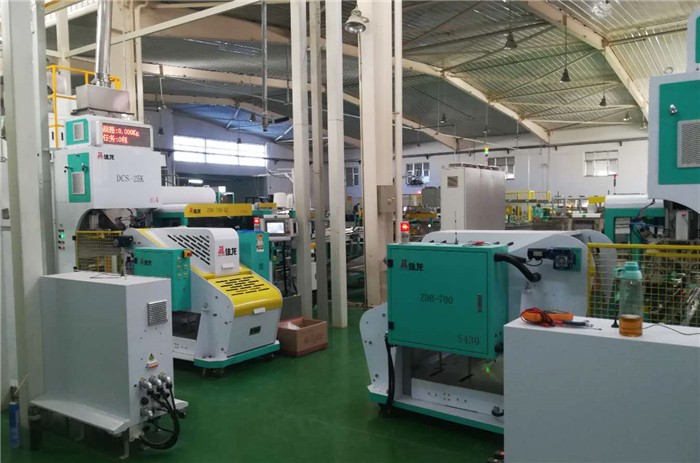
Define the bag before the line layout
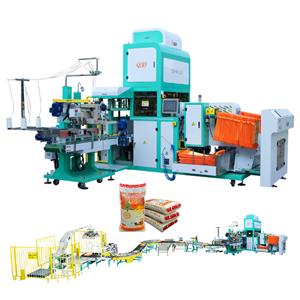
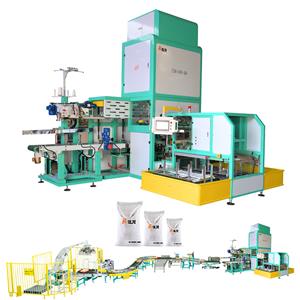
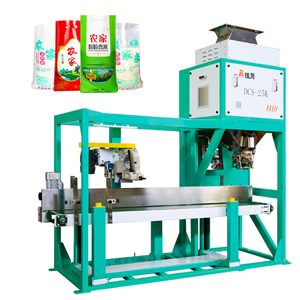
Woven polypropylene and paper bags can both be used for open-mouth grain packing, as shown on Jialong's verified 25–50 kg rice packing line. They are not interchangeable blanks. Mouth stiffness, liner position, wall friction, venting and manufacturing tolerance change how each bag opens, clamps and moves into the sewing machine.
Use production bags for the trial rather than hand-made samples. The drawing needs to identify bag width, length, gusset, liner, mouth construction and the required top clearance after filling. Where several suppliers are involved, include samples from each source. Bag variation is far easier to accommodate during grain bagging line design than after installation.
From product feed to discharge
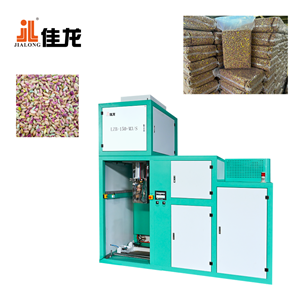
The verified Jialong configuration includes weighing, bag handling, filling, sewing and conveying. A related rice weighing and bagging system also lists thread cutting and control interfaces. For the project team, those functions translate into six checkpoints.
The upstream bin supplies grain at a stable rate without bridging or sudden surges.
The grain weighing machine completes coarse and fine feed using settings established with the actual product.
The bag clamp holds the mouth securely without damaging the bag or trapping its liner.
The filled bag is lowered or supported so that product settlement does not jerk the mouth out of position.
The sewing head and thread cutter produce the agreed closure while the conveyor keeps the bag upright.
The discharge conveyor hands the bag to manual handling or an approved downstream system.
For woven PP bag packing, the seam specification should state the thread, stitch position, fold or tape requirement and acceptable loose ends. Paper bags may use a different closure and require different handling at the mouth. Put these details in the equipment specification. Leaving them until commissioning creates avoidable rework.
Plan operator access around the heavy bag.
Leave enough room for empty-bag loading, cleaning, jam recovery and removal of a rejected filled bag. The arrangement needs to keep operators from reaching across a moving conveyor or standing in the path of a released package.
What affects weighing in real production
Grain variety, moisture condition, bulk density, broken-grain content and product head above the feeder can all change flow into the scale. A 25 kg bagging machine and 50 kg bagging machine may share equipment, but each weight needs its own validated settings. The plant also needs a defined reference-scale check frequency and a procedure for out-of-tolerance bags.
Accuracy and output change with product flow, target weight, feed stability, bag handling and line configuration. Assess them with representative production material and an agreed test method, not isolated readings from a short demonstration.
What to cover in the trial
Run every intended bag weight and at least the products with the largest flow difference.
Inspect bag pickup or manual presentation, clamping, liner position and release.
Check weight using a documented sampling interval and calibrated reference method.
Review seam position, skipped stitches, thread cutting and top clearance.
Test stops and restarts with material in the grain bagging line.
Confirm conveyor direction, height, guarding, access and the downstream handoff.
A workable proposal needs the floor plan, available height, product supply arrangement, bag drawings, target weights, expected output range, closure specification, utility data and the finished bag's destination. With those inputs, the wider grain bagging machine range can be narrowed to equipment that fits the actual process.
Capacity discussions work better with real bags and a real layout.
Send product information, target bag weights, bag samples and a plant drawing to export@jialong.cn or contact Jialong at +86-13625794992.