Electronic Weighing Turns Grain Packing into a Traceable Handoff
An electronic scale becomes useful on a packing line when its weight result can be followed into the bag, seal and discharge. The weighing-and-packing stage is therefore an interface between product flow and the next module, not a standalone promise of accuracy.
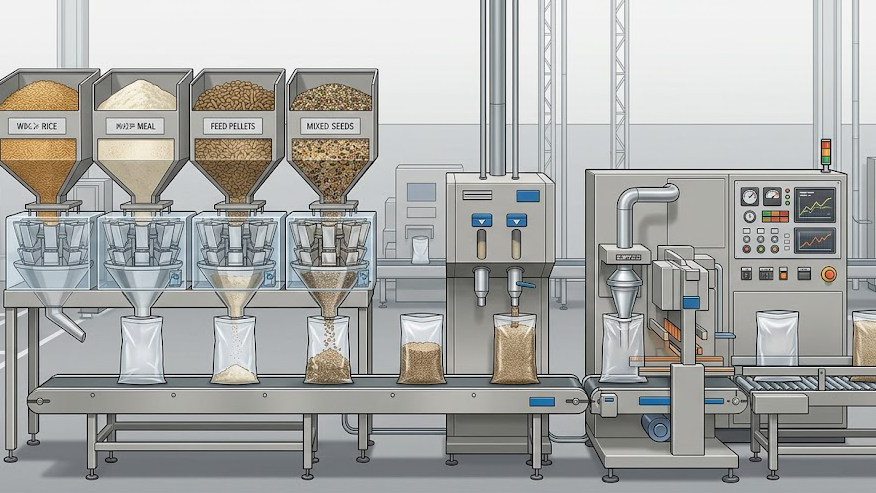
Density changes the input: Rice, feed pellets, flour-like meal and seeds can occupy different volumes at the same mass. An automatic grain packing machine needs representative product and a defined target weight so its feed path, bag presentation and downstream timing can be observed together.
The scale and filler share a handoff: An electronic weighing packing machine may finish the dose while product is still settling in the receiving bag. Fill height, headspace and loose particles become part of the next operation. A recorded weight without the corresponding bag condition leaves the line review incomplete. The industrial vacuum packaging machine receives that condition later, and an automatic vacuum packing machine trial can reveal its effect.
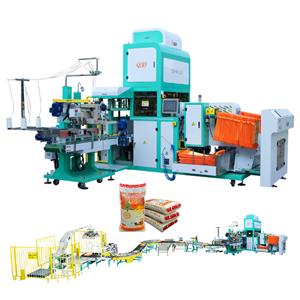
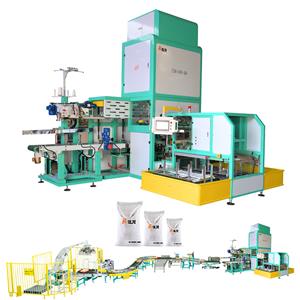
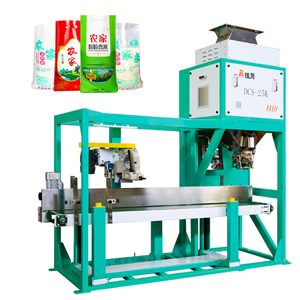
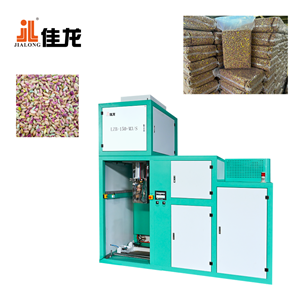
Start with published modules: Jialong's rice flow scale category and automatic grain bagging category provide separate equipment references. The industrial weighing and packing machine arrangement still depends on the material, bag, target weight and adjacent equipment. The automatic grain packing machine remains tied to those inputs.
Vacuum follows the filled bag: Where the package uses vacuum, the automatic vacuum category describes a sequence that includes weighing, filling, shaping, vacuum, sealing, discharge and conveying for selected products. An automatic vacuum packing machine receives the result of upstream dosing; it does not erase variation already present in the product or bag. The next automatic vacuum packing machine sample can be compared with that record.
Record the change, not only the average: A trial can retain the material lot, set weight, observed weight, fill position and seal appearance for each sample group. The automatic grain packing machine may behave differently after a density shift, while the industrial weighing and packing machine record shows where that shift entered the line. The electronic weighing packing machine display is only one part of that record.
Downstream handling closes the loop: A newly sealed bag needs support while it transfers away from the vacuum or heat-seal area. The industrial vacuum packaging machine layout should be reviewed with the conveyor, inspection point and carton orientation. A second automatic vacuum packing machine run can expose a transfer issue that a single sample would hide.
Do not import unsupported figures: Accuracy percentages, line speeds, giveaway savings and regulatory outcomes depend on the product, scale, bag and test method. The industrial weighing and packing machine can provide records for those studies; it does not establish a universal result from a brochure description.
The line brief becomes measurable: Name the material range, weight range, bag, filling method, vacuum requirement and discharge direction. Then the automatic grain packing machine, electronic weighing packing machine and industrial vacuum packaging machine can be reviewed as one traceable process, with open questions left for the next trial.