Grain and Legume Changes Begin at the Line Infeed
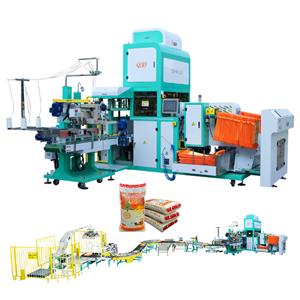
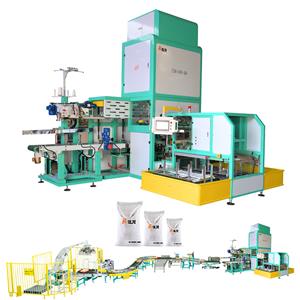
Whole grains and legumes can share a finished bag size while behaving differently before the seal. Particle shape, bulk density, dust and surface condition affect the infeed and dose. A grain vacuum packing machine trial therefore begins with separate product records. The automatic grain packing line links those records to each handoff, and the quantitative packing machine provides the first measurable comparison between the products.
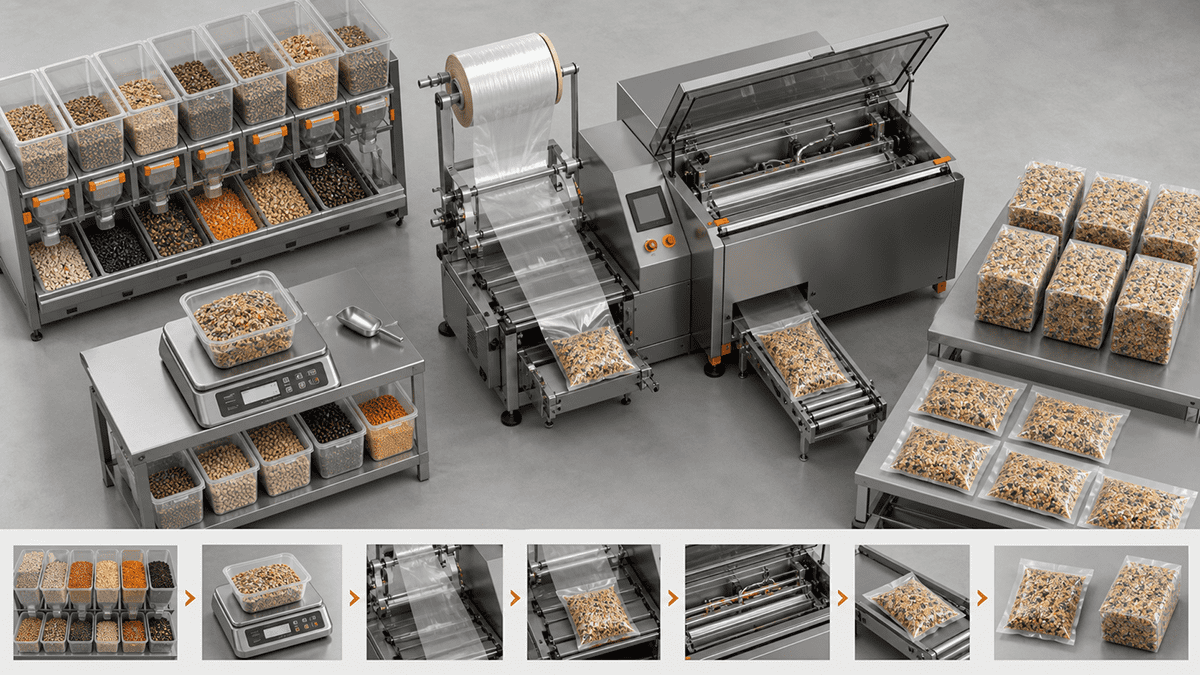
Two products need two input records: The supplied article discusses compact storage and protection as possible benefits, not guaranteed results. The project record is more specific. It identifies crop variety, particle dimensions, bulk density, dust, surface oil and acceptable breakage. The proposed bag and film are attached to each record. This gives the grain vacuum packing machine a defined product range, keeps the vacuum packaging machinery tied to actual materials, and gives the automatic industrial vacuum packer an input that can be reproduced.
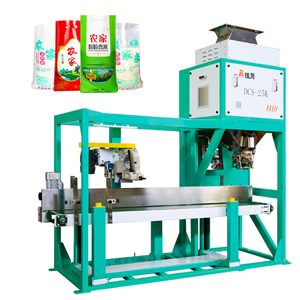
Dose behavior appears before vacuum: A beginning and end sample from each product show whether the quantitative packing machine holds the agreed weight. The record also notes fines, bridging or an unstable feed. These observations follow the bag into the automatic grain packing line rather than being treated as a separate demonstration. The automatic industrial vacuum packer then receives a known fill, so changes in pack geometry are less likely to be confused with a change in dose.
The seal records what arrived there: Particles or dust at the open edge may originate upstream. Samples from the vacuum stage are labeled with the product, weight, film and inspection time. The vacuum packaging machinery settings stay with the same record. The measured dose is compared with the retained pack so a filling variation is not mistaken for a sealing fault.
Clearing connects one run to the next: Residual grain or legumes can remain at transfers, in weighing areas or near bag presentation. A planned product change exposes those locations. The automatic grain packing line record names what was opened, cleaned and inspected before restart. The automatic industrial vacuum packer contributes its chamber or forming-area check, while the vacuum packaging machinery record captures the first accepted bag after the change.
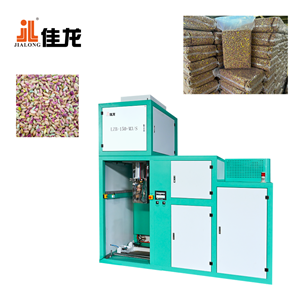
One short run cannot cover both products: The grain vacuum packing machine is observed with representative grain and representative legumes. Weight, visible damage, seal condition, leakage method and finished dimensions remain separate for each. The quantitative packing machine result is also recorded after a normal stop. Together with the automatic grain packing line and automatic industrial vacuum packer restart, this shows whether the process returns to the accepted condition.
Inputs for an engineering review: Product samples, bag and film data, target weights, finished-pack drawings, utilities and the floor layout define the project. Jialong's verified vacuum equipment category and automatic equipment category provide references. The records show how the grain vacuum packing machine, automatic grain packing line, quantitative packing machine and vacuum packaging machinery enter the trial.