Machine Classification for Granular Packing Projects
Requests arrive phrased as "we need a packing machine" when the project actually needs three different machines in sequence. Granular packing equipment splits by task and bag format more than by brand, and a working classification saves weeks of confused correspondence.
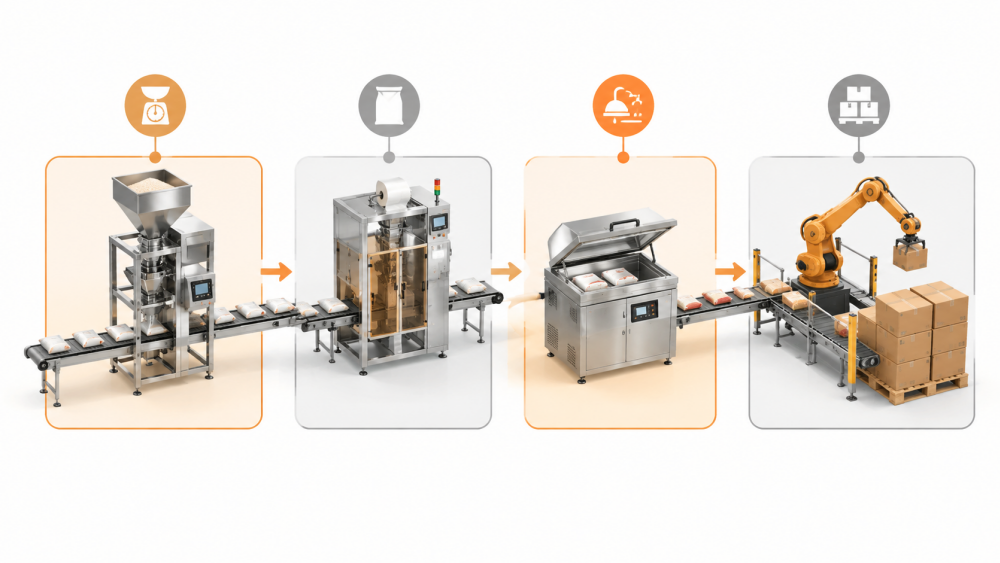
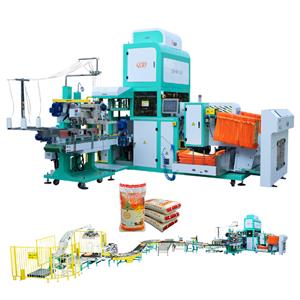
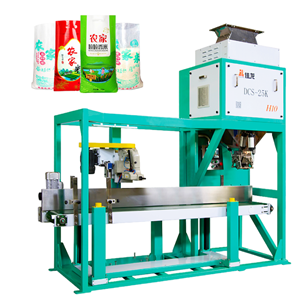
Weighing first: the packing scale family: Before any bag exists, product must be measured. Net weighers batch a fixed weight into a hopper before discharge; gross weighers fill the bag sitting on the scale. The packing scale decision hinges on target weight, accuracy class and cycle rate, and it is independent of what happens downstream. A granule packing machine line built around a wrong weigher never recovers the accuracy later. For the automatic rice packing machine, ask who supplies the vacuum pump and how long a spare part takes to arrive at your site.
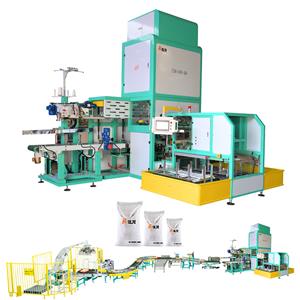
Bagging second: open-mouth and valve systems: Pre-made bags feed open-mouth bagging machines, where an automatic bagging machine clamps the bag, receives the weighed dose and hands it to a sealer. Valve bags suit powders that puff; woven poly bags suit feed and seed at 25 kg and up. Speed classes differ, and the choice interacts with how bags arrive at the station, manually stacked or from a magazine. Spare availability and service response stay with the automatic bagging machine long after the invoice is forgotten.
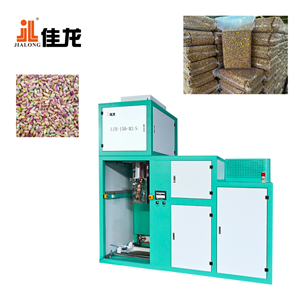
Vacuum third: chambers and their layouts: Where removal of air is required, chambers take over, and their classification, single, double, rotary, is about cycle overlap rather than vacuum quality. Vacuum packaging machinery integrates with the upstream weigher through a bag transfer point whose design determines whether line speed is limited by weighing or by evacuation. Once a full season is running, buyers ask different questions about the automatic bagging machine than they did during commissioning. Keep a short log next to the automatic rice packing machine; failed settings are as useful as the ones that passed.
End of line: closing, checking, stacking: Stitchers or heat sealers close industrial bags, checkweighers verify, and palletizers stack. Each stage is a separate equipment family with its own suppliers and spares. Zhangzhou Jialong Technology Co., Ltd. supplies these stages as matched sets and documents typical combinations at https://jialongpacking.com/, which is the practical way to see how the families fit into one packing line. Run the automatic bagging machine on your own material for a fortnight and most open questions close themselves.
On dry granular product runs, static quietly pulls particles toward the wrong part of a particle vacuum packaging machine. Ground the filling frame and consider an anti-static film if bags cling during magazine release.
Fine dust decides the layout of a particle vacuum packaging machine more than capacity does. On a granular product line, put the dustiest trial first, because a clean sample can hide a sealing problem that shows up in real production.
Review the automatic weighing packing machine trend once a week instead of relying on alarms. On a granular product line, a slow upward drift in mean weight is easier to correct before it becomes a claim.
An automatic weighing packing machine drifts quietly when vibration enters the frame, so check levelling feet monthly. On a granular product line, a two-gram drift repeated over a shift is a real cost, not a rounding error.
Mixed granular product sizes need a slower final evacuation; otherwise fine particles drift toward the seal area of the particle vacuum packaging machine. Ask the builder to demonstrate with your dustiest grade before approving the layout.
Run the automatic rice packing machine through one deliberate stop and restart during commissioning. A granular product line that cannot recover its fill weight cleanly after a jam will lose more in a season than the restart saved.
Set the automatic weighing packing machine coarse and fine feed limits with your slowest granular product grade. Fast settings that suit free-flowing material overshoot when fines or humidity slow the flow.
Vacuum packaging machinery families overlap, and buyers often mix them up. A brick press line is not a nozzle machine, and an open-mouth bagger serves a different market. Map the task first, then the bag format, then the machine. That order prevents most classification mistakes.
Classification gets easier once the task is clear: vacuum packaging machinery is chosen by bag format and product flow, not by brand category. A machine that holds its seal quality on your film, at your speed, is the right machine regardless of what the brochure calls it.
Vacuum packaging machinery classification becomes easier once the task is clear: bag format, product flow and duty cycle decide the machine. A short material run settles most disagreements.