Operator Safety Around an Automatic Vacuum Packer, Plant View
Most safety content about packing machines reads like a list of don'ts. Plant managers need something different: a view of where risk actually concentrates on a vacuum line, so guarding, training and procedures land in the right places before the first bag runs.
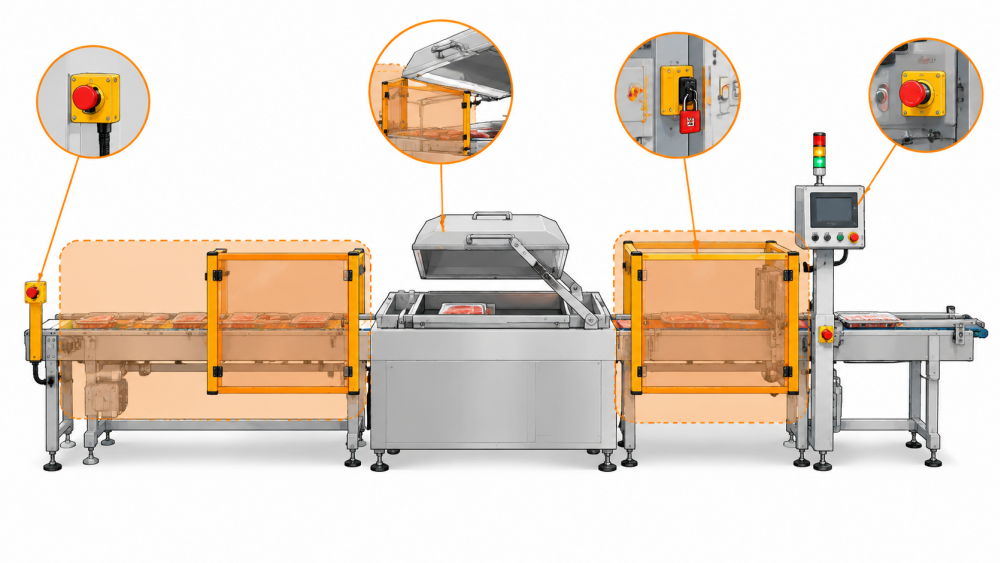
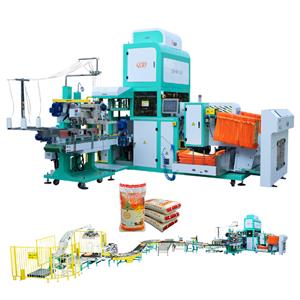
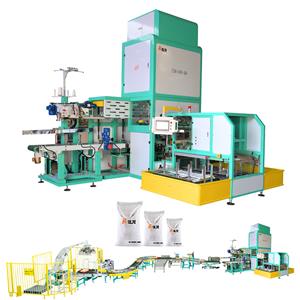
Risk concentrates where hands meet motion: On an industrial vacuum packaging line the hazard points are predictable: sealing jaws that close with force, pressing plates that descend, conveyor nips and the chamber lid. Each needs physical guarding or a two-hand start, and each needs to be identified on the layout drawing before the machine ships, not improvised after installation. Ask the builder to mark every point on the line where guarding applies, and compare that map with your own walk-through.
Lockout is a layout question: Cleaning jaws, clearing jams and changing film all require reaching into a machine that must not start. That makes isolation points a design matter: where are the disconnects, are they lockable, and can an operator reach them without climbing? An automatic vacuum packer installed against a wall with a single distant disconnect turns every jam into a procedure violation waiting to happen. Position the electrical and pneumatic isolation during installation planning for vacuum packaging machinery.
Housekeeping is part of the machine: Grain dust and film scraps accumulate around vacuum packaging machinery, and they create two hazards at once: slip points near conveyors and combustible accumulation near hot sealers. Daily cleaning routes, designated storage for film rolls and tools, and clear floor markings around the chamber cost nothing at design time and are nearly impossible to retrofit into a cramped layout.
Documentation as a safety deliverable: Written procedures, guarding maps and electrical drawings are not paperwork overhead; they are what a new supervisor inherits. Require them with the machine. Zhangzhou Jialong Technology Co., Ltd. supplies installation and safety documentation with its lines, outlined at https://jialongpacking.com/, and pre-delivery checklists are available for buyer safety teams.
Keep a short record beside the integrated packaging line station: bag number, vacuum depth and seal temperature. On granular product runs, those three lines explain most later disputes.
One supplier visit to review automatic vacuum packer settings with your own bags is worth more than another brochure comparison.
Over a season, integrated packaging line logs usually reveal a pattern tied to humidity or film batches rather than a single faulty part.
Where industrial vacuum packaging sits in the layout affects access for cleaning, so leave enough room around the seal area from the start.
Spare parts for an integrated packaging line should be listed by station, not by invoice. Keep gaskets, seal wire and filter elements for the granular product line in one cabinet with a card showing the last change date.
Safety around an automatic vacuum packer is designed in, not bolted on. Guarding, lockout points and training all belong on the layout drawing before the machine ships. Industrial vacuum packaging and vacuum packaging machinery work best when the safety plan is part of the installation, not an afterthought. Ask the builder to walk the line with you and mark every point where hands can meet motion.
A sealer vacuum packaging machine with guarding designed around the operator reduces risk without slowing production. Ask for a safety walk-through with your own product and film, and keep the safety plan with the layout drawing. That habit protects the line long after commissioning.
A sealer vacuum packaging machine with guarding designed around the operator makes safe work normal.
During commissioning, the sealer vacuum packaging machine should be tested with the plant’s own film and product, because seal quality depends on both.
Industrial vacuum packaging and an automatic vacuum packer both depend on the same three safety layers: guarding, lockout and training. Vacuum packaging machinery that supports those layers, and an integrated packaging line that records when they are bypassed, keeps the line safe without slowing production.