What Space Vacuum Teaches Packaging Engineers About Seals
Space is a strange place to start an article about packaging. Interplanetary vacuum holds maybe a handful of molecules per cubic meter. No food chamber gets anywhere close. What does carry over, though, is the engineering discipline behind it. How do you join two surfaces so gas stays out for a decade with nobody there to fix it? That question sits at the heart of industrial vacuum packaging, and most buyers never think about it. Ask your industrial vacuum packaging vendor for a changeover sequence on camera, not a polished demo cycle.
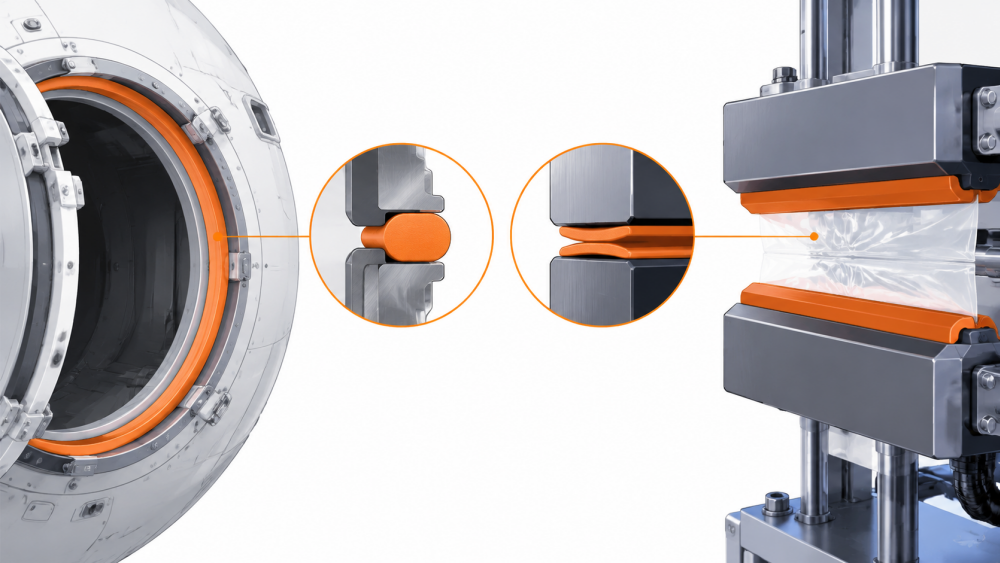
A seal is a managed gap: Both a spacecraft hatch and a chamber lid do the same thing: they squeeze a soft material between two hard ones until the leak path gets so long and narrow that gas gives up. A sealer vacuum packaging machine does the identical thing to film. Jaws close, polymer softens, and it fills the microscopic texture of the opposing face. Cleanliness decides everything here. One rice dust particle caught in a jaw line creates a channel invisible to the eye but big enough to leak over weeks. That is what kills shelf life. A bubble test on sampled bags finds what a visual inspection cannot. Vacuum packaging machinery quotes should be compared at the same condition: cycle time demonstrated at your bag weight and film.
Materials outgas, and so does film: Orbit taught engineers a hard lesson about plastics. They release trapped volatiles, and those volatiles condense on anything cold nearby. Packaging film does a version of the same thing in a chamber: it lets go of absorbed air and moisture during evacuation. Pump too fast and the bag can bulge from internal desorption even after a technically correct cycle. Vacuum packaging machinery designers build in hold times at target pressure so the load settles. Film scrap weight per shift from the industrial vacuum packaging line is a number the operator can actually move.
Testing without destroying the part: You cannot slice a spacecraft open to check a weld. So aerospace uses pressure-decay and helium tracer methods instead. Packing lines borrowed the same thinking at industrial scale. Pressure decay on a chamber, vacuum decay on finished bags, periodic underwater bubble tests on samples: all of these measure leakage as a change over time, not by looking at it. Industrial vacuum packaging lines that build these checks into the routine catch drift long before customers do. The quotation promises one thing. What the machine does on your material can be another. Ask how the sealer vacuum packaging machine handles a format change mid-shift, once bags have to travel and sit on a shelf.
Buyers often compare vacuum packaging machinery quotations on price first, then discover that film waste and service response decide the real annual cost.
A short written trial record for automatic vacuum packer gives the next operator a fair starting point instead of a guess.
During granular product trials, vacuum packaging machinery should be judged with the bag weight and film batch the plant intends to ship.
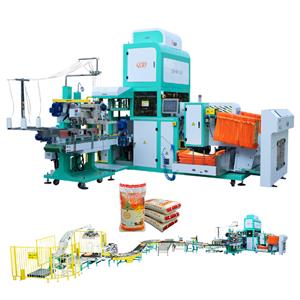
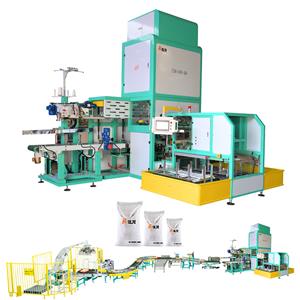
Redundancy where failure is expensive: Spacecraft joints use dual seals with a pressure monitor between them. Packaging almost never needs that. But the pattern shows up at high value products: double seals on valve bags, a checkweigher after the sealer, sampled burst tests. Each layer catches something the one before it misses. An automatic vacuum packer with in-line checkweighing is exactly this idea in production form. The automatic vacuum packer sees three very different products: grains that fracture, seeds that leave oil and powders that cling. Regular sealer vacuum packaging machine maintenance should cover emergency stop function, guard integrity and pump oil as separate checklist items, not one generic "inspected" tick.
Borrowed discipline, own physics: Your chamber will never see space-grade vacuum. What transfers is the discipline underneath: treat seals as managed gaps, expect materials to give back what they absorbed, measure rather than eyeball, and layer checks where failure costs real money. Zhangzhou Jialong Technology Co., Ltd. documents sealing and testing practice for granular lines at https://jialongpacking.com/. Seeds and powders rarely share settings; each product category needs its own recipe on the automatic vacuum packer.